DIY Winter Bird Feeders: Bring Nature to Your Window
Author: Christina Checked by Christina Projects Editorial Team Last reviewed Published on Category: Seasonal DIY
To make a DIY winter bird feeder, mix melted fat with birdseed until it looks like wet sand, press it into a mold, chill it until firm and hang it where you can see it. Use black oil sunflower seed, feed fat only in cold weather and clean any reusable feeder every week or two with soap and warm water. Mark nearby windows to prevent strikes.
Part of our guide: Seasonal DIY Calendar: What to Make and Do Each Month
- title: “Cornell Lab: Should I take my feeder down when the weather warms up?” url: “https://www.allaboutbirds.org/stagaabnews/should-i-take-my-feeder-down-when-the-weather-starts-to-warm-up”
A DIY winter bird feeder gives birds high-energy food in the cold months and gives you a view of them from the window. This page shows how to make a fat-and-seed cake, a pinecone feeder, a milk jug feeder and an ice ornament, which foods to use, and how to place and clean feeders so they help birds and do not harm them. It is a November project on the Seasonal DIY Calendar, and one that works well with children; for more family projects, see crafting together on rainy days.
What do I need to make a DIY bird feeder?
You need seed, a fat for the cakes, a mold or container and a way to hang it. Most of it is in the kitchen or recycling bin.
Foods that suit birds
- Black-oil sunflower seed: Audubon calls it the “hamburger” of the bird world, since nearly every feeder bird eats it.
- Peanuts: De-shelled, dry-roasted and unsalted only.
- Good mixed seed: Look for sunflower, cracked corn and white proso millet. Avoid mixes with lots of filler or dyed seed.
- Suet or beef tallow: Solid fat holds the cake together. Suet is sold at many supermarkets and butcher counters.
- Seed blend: Good mixed seed has a large amount of sunflower seed, cracked corn, white proso millet and peanuts.
Skip salted foods and seed mixes that are mostly filler.
Tools and household items
A saucepan, a heat-safe bowl, a wooden spoon, silicone molds or an ice cube tray, twine, a skewer, scissors and a baking sheet. You can buy bird feeder molds, but a muffin tin or silicone mold works as well.
How do I make a fat-and-seed feeder?
Melt the fat gently, mix it with seed to the texture of wet sand, mold it and chill it. The ratio used in the original project was 1.5 cups of tallow to 3 cups of seed, and you can adjust it by feel.
Hot fat can burn skin and catch fire if overheated, so keep it on low heat, never leave the pan, and keep children out of the kitchen while you melt it.
- Melt the fat. Chop it into small cubes, place them in a saucepan on low heat, and stir until it turns to liquid. Do not let it smoke. Take it off the heat and let it cool until it is thick but still pourable.
- Mix in the seed. Put the seed in a heat-safe bowl, pour the fat over it and stir until it is evenly coated. It should look like wet sand. If it is too runny, wait a few minutes for it to cool; if it is crumbly, add a little more fat.
- Mold it. Pack it firmly into silicone molds, an ice cube tray or a muffin tin. Place a loop of twine in the mix, or poke a hole with a skewer before it sets and thread twine through later.
- Chill. Refrigerate for 2 to 3 hours, or freeze for 30 to 45 minutes, until it is firm. Warm water over the mold’s outside helps release it.
- Hang it. Choose a spot you can see from a window, such as a branch or a hook.
Use fat feeders in cold weather only. The Cornell Lab says suet left out in hot weather can soften and foul plumage or turn rancid. Take them down in warm weather.
What other DIY bird feeder ideas can I make?
Any of these takes under half an hour, and most work for children with an adult doing the cutting and melting.
Pinecone feeder
Tie twine around the top of a pinecone, coat it with the fat-and-seed mix or spread it with a thin layer of fat, and roll it in seed. Hang it from a branch. It is a classic project for children.
Milk jug feeder
- Rinse a clean plastic jug and remove the cap.
- Cut two holes on opposite sides, 2 to 3 inches up from the bottom, large enough for birds to reach in but not for the seed to spill.
- Poke a hole below each opening and push a wooden dowel through for a perch.
- Fill with seed and hang it from the handle.
Because it is plastic, you can wash the milk jug feeder easily, which makes it the best reusable choice.
Ice ornament
- Fill a silicone mold or an ice cube tray halfway with water.
- Add a handful of birdseed, and lay a loop of twine in the water.
- Freeze overnight, remove the ornament and hang it outside.
Fruit slices, cranberries or pine needles can decorate the ornament. Remove it when it melts or if it looks spoiled.
A note on glass
Avoid projects that require cutting glass bottles. A cut glass edge can cause serious injury, and plastic or a purchased tube feeder is a safer, easier option.
Which foods bring which birds?
Match the food to the birds you want to see, using the guide below from Bird Watcher’s Digest editor Bill Thompson III, as summarized by Audubon.
| Food | Who eats it | Note |
|---|---|---|
| Black-oil sunflower seed | Nearly every feeder bird | The best single seed |
| Peanuts (de-shelled, dry-roasted, unsalted) | Woodpeckers, jays, nuthatches, chickadees, titmice, and some cardinals and finches | High in protein and energy |
| Suet | Woodpeckers and nuthatches, among others | High-fat; use in cold weather |
| Nyjer (thistle) seed | Small finches such as goldfinches and redpolls | Needs a thistle feeder or a thistle sock |
| Safflower | Many birds | Works in a sunflower feeder |
| Cracked corn | Sparrows, jays, doves and quail | Also a favorite of squirrels |
| Fruit | Many birds | Chop and soak raisins in warm water first |
Keep a few types in separate feeders to see a wider range of birds, and do not put seed on the ground in wet weather, where it turns soggy.
Where should I hang a feeder?
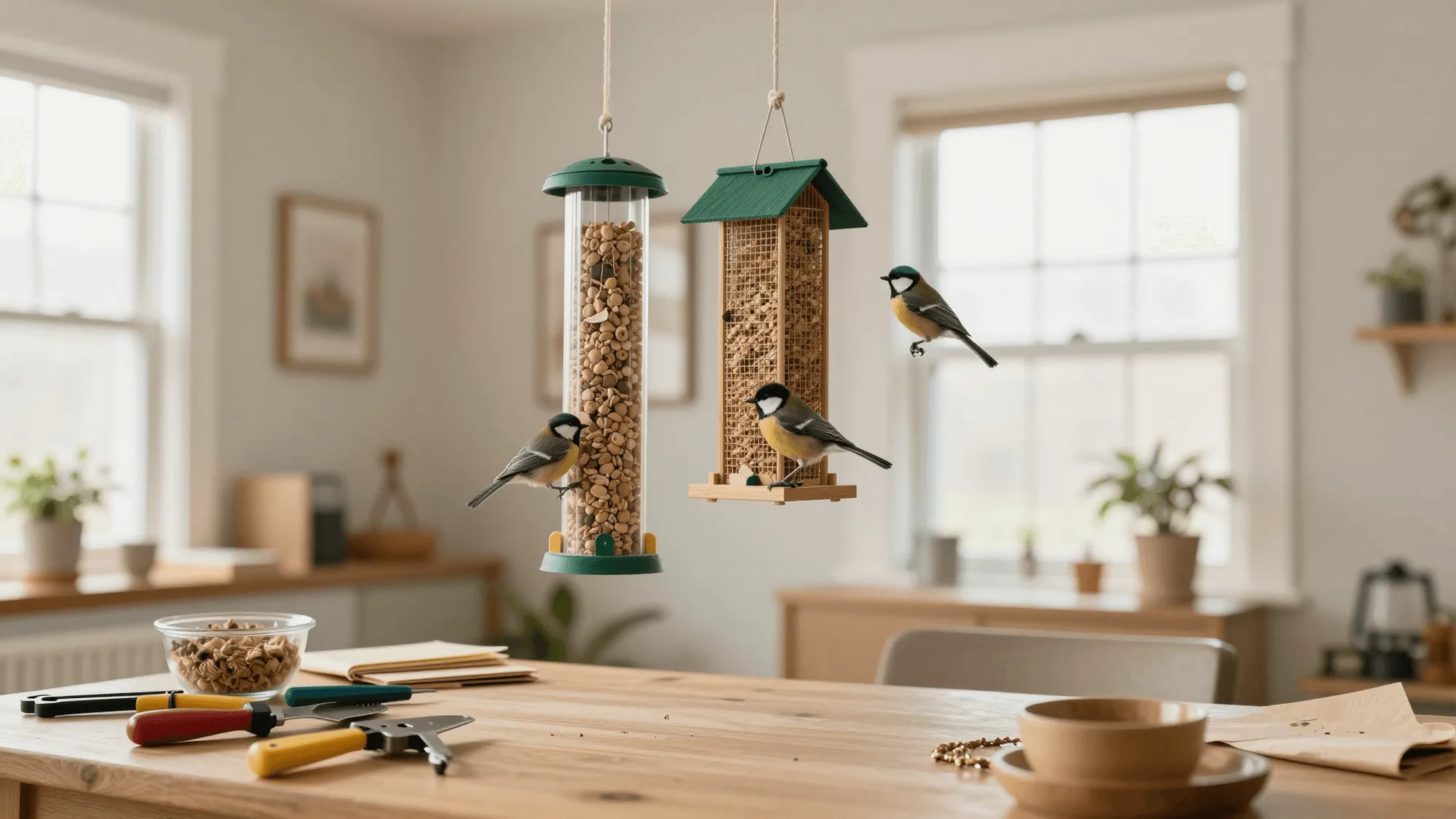
Hang it where you can see it and refill it easily, and near shelter such as a shrub or tree where birds can retreat. Vary the heights if you have more than one feeder, since different birds feed at different levels. Keep fat feeders in the shade so they stay firm.
How do I keep birds from hitting the window?
Mark the outside of the glass with a repeating pattern. Project FeederWatch recommends dots or lines made with paint, tape, stickers or strings and spaced no more than 2 inches apart, since the pattern breaks up the reflection of the sky and trees. Outside window screens also help. Dim or turn off lights at night during migration.
If you have a cat, keep it indoors. FeederWatch notes that cats kill hundreds of millions of birds a year, and that feeder birds are easy prey.
How do I keep a feeder clean and safe?
Clean reusable feeders every week or two, and more often in wet or heavy-use periods. Project FeederWatch says feeders can spread diseases between birds, and gives these steps:
- Take the feeder apart and scrub off debris.
- Wash all parts with warm water and dish soap, and rinse them well.
- Let everything dry completely before refilling.
- Wear gloves when you handle feeders, and wash your hands afterward.
- Rake or sweep the ground under the feeder to remove droppings and spoiled seed, which also attract rodents.
Do not use feeders that cannot be washed thoroughly, such as wood. Throw away seed that smells off or looks discolored. If you see sick birds, take the feeders down for a while and clean them. You can also fill a bird bath with fresh water in winter if you keep it from freezing and clean it regularly.
What other winter projects pair with a bird feeder?
Fresh greenery is an easy next step. Try winter window box ideas for a feeder-friendly view, winterizing your home for sealing the drafts around that window, and cozy winter atmosphere ideas for the indoor side of the window.
| Feeder | Feeds | Time | Reusable? | Cleaning note |
|---|---|---|---|---|
| Fat and seed cake | Woodpeckers and nuthatches, among others | 20 min plus chilling | No, single use | Throw away leftovers; wash the mold |
| Pinecone feeder | Seed and fat eaters | 10 min | No, single use | Replace when it is eaten or moldy |
| Milk jug feeder | Mixed seed eaters | 5 to 10 min | Yes | Wash it with soap and dry it before refilling |
| Ice ornament | Seed eaters | 10 min plus freezing | No, single use | Hang for the day; do not leave it if it spoils |
Start with a pinecone or fat cake for a quick project with kids. Choose the milk jug feeder if you want something that lasts the winter, since it is plastic and easy to wash.
Frequently asked questions
What do I need to make a DIY winter bird feeder?
For a fat-and-seed cake, you need solid fat such as suet or beef tallow, birdseed, a saucepan, a mixing bowl, a mold such as a silicone mold or ice cube tray, and twine for hanging. For a milk jug feeder, you need a clean jug, scissors, a dowel and seed. Everything is available at a grocery or hardware store.
What is the best birdseed for winter?
Black-oil sunflower seed is the most popular, because nearly every feeder bird eats it and the thin shell is easy to crack. Add peanuts that are de-shelled, dry-roasted and unsalted, and use a good mixed seed with sunflower, cracked corn and white proso millet. Avoid mixes full of filler or dyed seed that most wild birds ignore.
How do I keep a homemade suet feeder from melting or spoiling?
Use fat-based feeders only in cold weather, and hang them in shade, since the Cornell Lab says suet left out in hot weather can soften and foul birds' plumage or turn rancid, and that raw or homemade suet should not be offered in summer. Remove any cake that smells off, looks discolored or has mold. Take down fat feeders when temperatures rise in spring. Store extra cakes in the freezer and hang one at a time.
How often should I clean a bird feeder?
Project FeederWatch recommends cleaning seed and suet feeders every week or two, and more often when they are used heavily or the weather is wet. Take the feeder apart, scrub off debris, wash it with warm water and dish soap, rinse it well and let it dry completely before refilling. Wear gloves and wash your hands afterward.
How do I stop birds from hitting my windows?
Project FeederWatch recommends marking the outside of the window with a repeating pattern, such as dots, with paint, tape, stickers or strings spaced no more than 2 inches apart, and adding outside screens. Dim lights at night during migration. A pattern on the outside breaks up the reflection of sky and trees, so birds see the glass as a barrier.
Can I use bread, corn syrup or gelatin in a feeder?
Skip them. Stick to the foods the bird-feeding sources recommend: solid fat, sunflower and other plain seed, and de-shelled, dry-roasted, unsalted peanuts. Do not use salted foods, and avoid seed mixes that are mostly filler, since most birds leave them behind.
Are DIY feeders safe for birds?
They are when you keep them clean and fresh. Dirty feeders spread diseases such as salmonella, and Project FeederWatch recommends regular washing, tidying the ground below, and not using feeders that cannot be washed, such as wood. Single-use cakes and pinecones are easy to replace. If you see sick birds, take the feeders down for a while and clean them.
Source notes
- Project FeederWatch (Cornell Lab of Ornithology): How To Clean Your Feeders (feederwatch.org)
- Project FeederWatch (Cornell Lab of Ornithology): Safe Feeding Environment (feederwatch.org)
- Audubon: Top 10 Foods for Winter Bird Feeding (audubon.org)
Related guides
- Seasonal DIY Calendar: What to Make and Do Each Month
A month-by-month calendar of seasonal DIY and decor projects, from winter mantels to spring planters, summer patios and fall wreaths.
- DIY Thanksgiving Tablescape: Impress Your Guests
Build a DIY Thanksgiving tablescape in an evening: runner, low centerpiece, place settings and flameless candle tips, with fire safety rules.
- Cozy Fall Mantel Decor Ideas on a Budget
Style a cozy fall mantel on a budget with a four-layer formula, three color palettes, a DIY leaf garland and fireplace safety rules.
- How to Build DIY Raised Garden Beds on a Budget
Build a 4x8 raised garden bed with a cut list, lumber and treated-wood guidance, soil math and lead-safe tips for a low-cost spring project.
- Refreshing Your Front Porch for Spring: Simple Seasonal Swaps
Refresh your front porch for spring with a clean-up, a door wreath, outdoor-safe lighting, planters and a few cushion and mat swaps.
- Room-by-Room Spring Cleaning Checklist for Busy Moms
A room-by-room spring cleaning checklist for busy parents: supplies, the order to work in, a task list for each room and 20-minute sessions.