DIY Backyard Movie Night Setup: Screen, Projector, Safety
Author: Christina Checked by Christina Projects Editorial Team Last reviewed Published on Last updated Category: Family-Friendly DIY
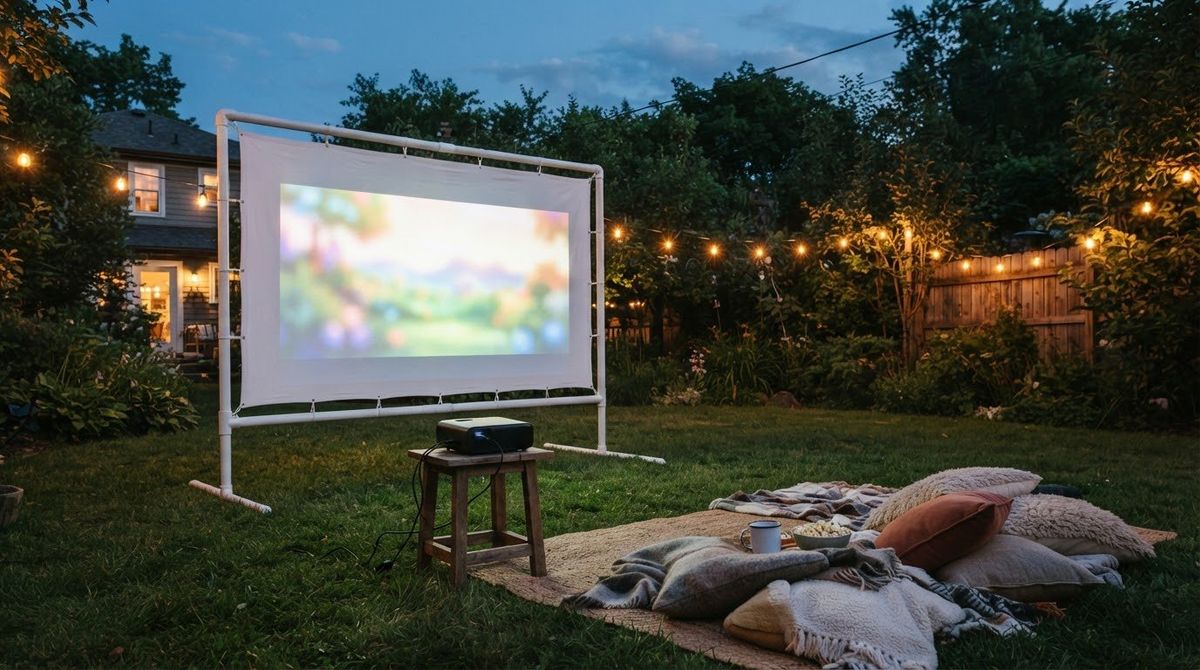
A backyard movie night needs four things: a flat white screen, a projector placed at the right distance, sound that reaches the lawn and safe power. Build a PVC frame with blackout cloth, start after dark, plug everything into a GFCI-protected outlet with outdoor-rated cords, keep cords out of walkways and use an EPA-registered repellent on children as the label directs.
Part of our guide: Rainy Day Crafts for Kids: 10 Projects to Make Together
A backyard movie night turns an ordinary lawn into an outdoor theater with a projector, a homemade screen and a pile of blankets. It is one of the easiest ways to follow our kids and family projects outdoors on a warm evening. This guide covers screen options, projector placement, sound, seating, safe power and bug control, so the only surprise is the movie.
What do you need for a backyard movie night?
You need a screen, a projector, a media source, speakers, seating and safe power. Everything else is comfort.
| Item | Simple option | Better option |
|---|---|---|
| Screen | White bedsheet | PVC frame with white blackout cloth |
| Projector | Small home projector | Projector with brightness suited to outdoor dusk |
| Source | Laptop or phone | Streaming stick or media player |
| Sound | Bluetooth speaker | Two powered speakers near the audience |
| Power | Outdoor-rated extension cord | GFCI-protected outlet and weatherproof cover |
| Seating | Blankets and pillows | Tarp, rugs, foam mats and bean bags |
Plan a backup, such as a living-room screening, in case of rain or wind.
What is the best DIY outdoor movie screen?
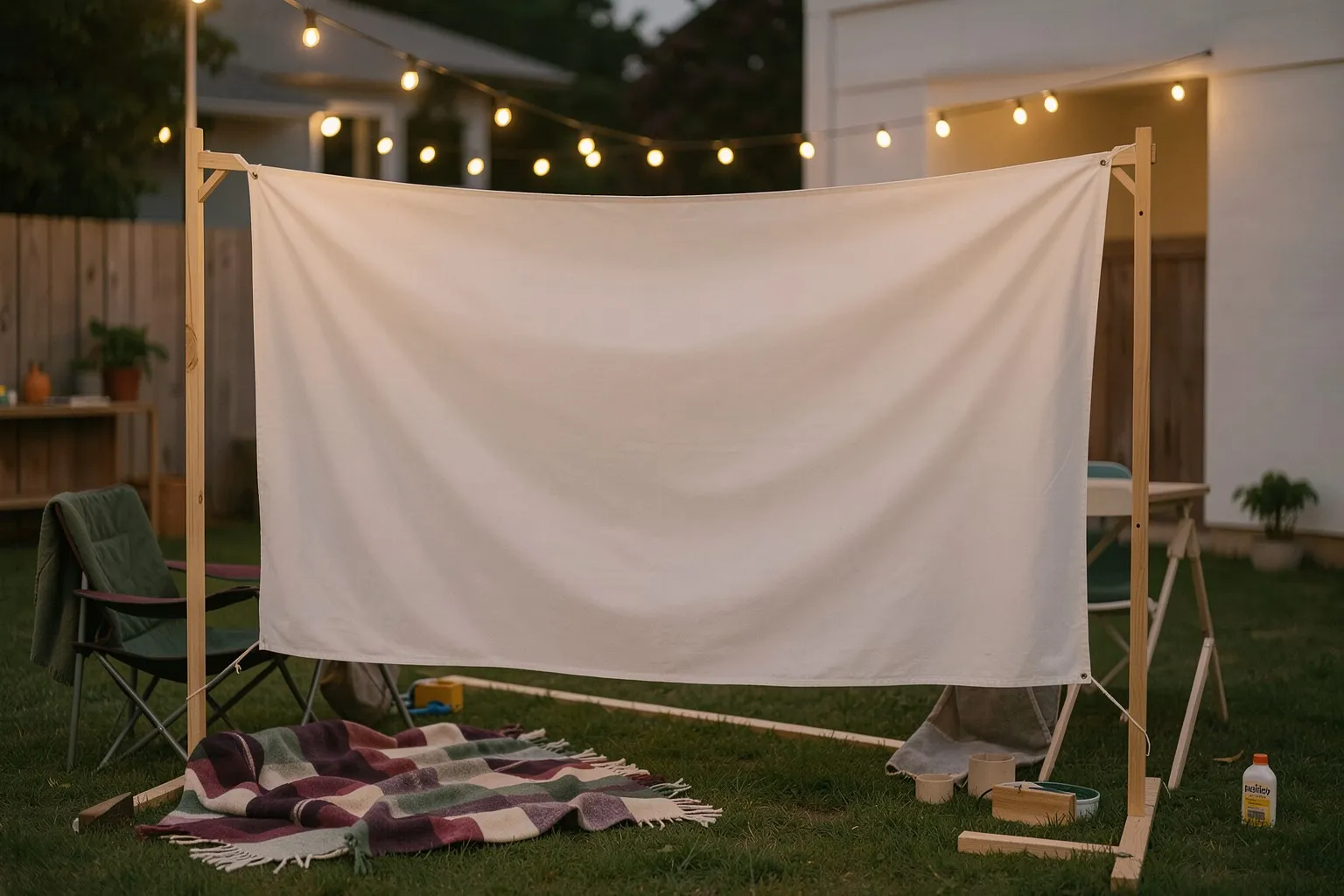
A flat, bright, windproof surface wins, and a PVC pipe frame covered in white blackout cloth is the easiest way to get one. Blackout drapery liner has an opaque backing that stops light from passing through, so the image looks sharper than it does on a plain sheet.
Option 1: white bedsheet
A sheet is the cheapest screen and works for a first try. Iron it flat, hang it from a rope or a fence and weigh the bottom corners so it does not billow. Thin sheets show the fence or yard behind them, and any wrinkle bends the picture.
Option 2: PVC pipe frame with blackout cloth
This is a freestanding screen that one adult can carry. A 100-inch diagonal screen in 16:9 shape measures about 87 inches wide and 49 inches tall. A frame cut from 1.5-inch PVC pipe is light enough to move and sturdy enough for a gentle breeze.
- Cut pipe to the width and height you want, and allow for the fittings.
- Join the corners with PVC elbows and the base with tees, so the frame stands on two feet.
- Dry fit the whole frame before you glue anything. You can leave joints unglued so it comes apart for storage.
- Cut white blackout cloth a few inches larger than the frame, hem the edges and attach it with clips or small grommets and ties.
- Pull the cloth tight and flat, then check the surface for wrinkles.
- Stake or weigh the feet. Wind is the screen’s biggest enemy, so take it down in a storm.
Option 3: inflatable screen
An inflatable screen is the easiest to set up, but it needs a powered blower and an outlet, and it costs more. Follow the maker’s instructions for staking and wind limits.
How do you set up the projector?
Place the projector where the picture fills the screen without distortion, and choose a spot where no one can trip over it. Details vary, so check your projector’s manual for throw distance, image size and brightness.
- Distance. Move the projector forward or back until the image fills the screen, then adjust focus.
- Height. Place it on a sturdy table or tripod at about screen height, tilted as little as possible, so the image stays rectangular.
- Brightness. Projectors compete with ambient light, so wait for full dark and turn off porch and yard lights that shine on the screen.
- Source. Connect a laptop, streaming stick or phone, and test the video and audio at dusk before guests arrive.
- Cover. Shield the projector from dew and sprinklers, and keep a cloth ready in case of a shower.
How do you get good sound outdoors?
Open air spreads sound out, so place speakers near the audience, not by the screen. Bluetooth sometimes lags behind the picture, so test it first and use a wired connection if you hear a delay.
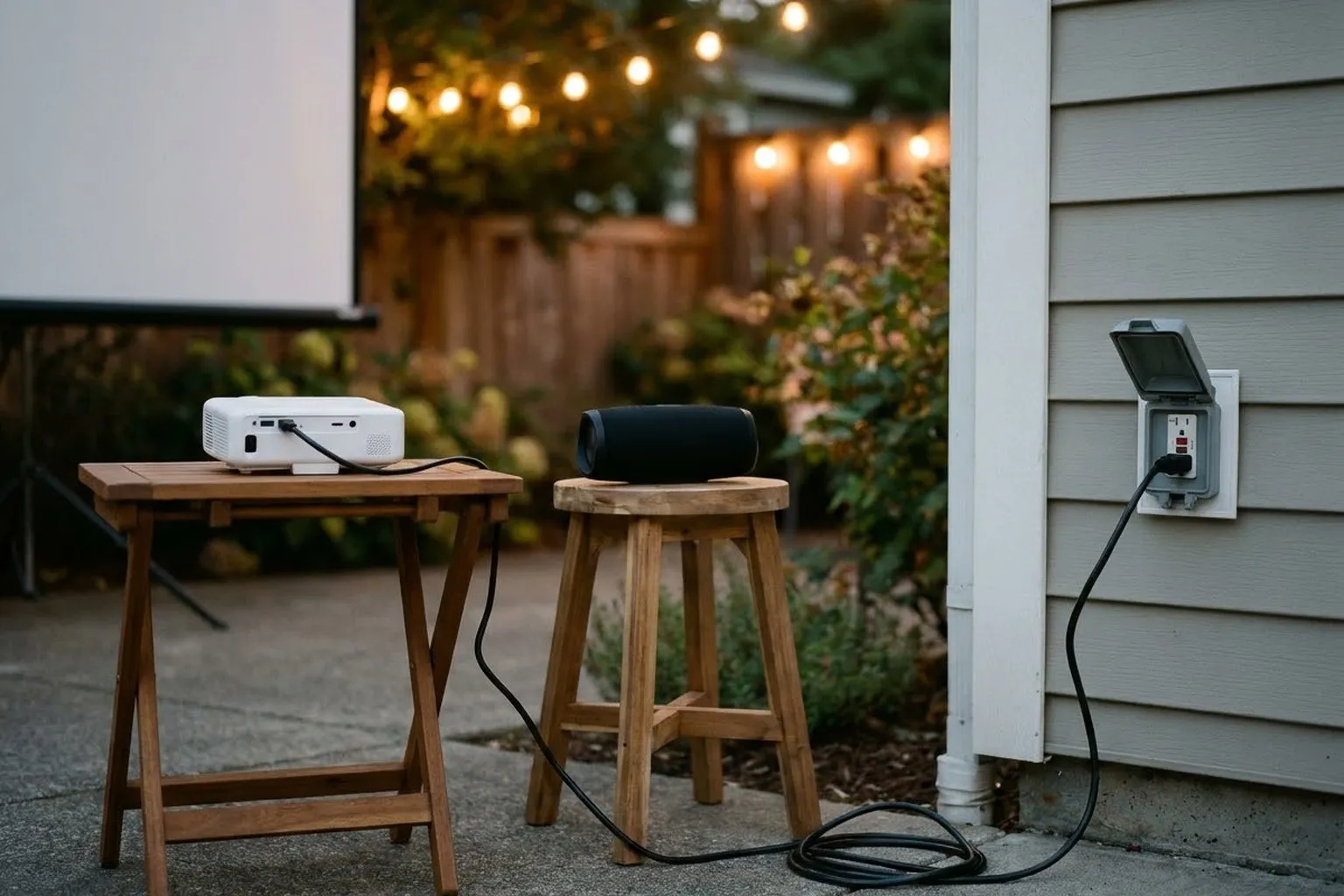
Point speakers at the seating area, keep the volume at a level that suits your neighbors and stop the movie at a reasonable hour. A quick note to nearby households is a polite touch.
How do you run power outdoors safely?
Use a GFCI-protected outlet, outdoor-rated cords and a plan to keep cords out of the way. Electricity and wet grass are a bad mix, so this step comes before the popcorn.
The Electrical Safety Foundation International (ESFI) gives these rules for outdoor electrical equipment:
- Use extension cords and devices marked for outdoor use.
- Match the amperage of the equipment to the rating of the cord.
- Plug into a ground fault circuit interrupter (GFCI). If the outlet is not GFCI protected, buy a portable outdoor GFCI.
- Inspect lights, devices and cords for damage before use.
- Keep cords clear of snow and standing water.
- Do not overload outlets, which can overheat and cause a fire.
- Do not pinch cords in doors or windows, or under heavy furniture.
Also route cords along fences or garden edges, away from walkways, and cover crossings with a cord cover so children do not trip in the dark. Unplug everything when the movie ends, and do not leave electronics outside overnight.
What seating works on a lawn?
Layer a waterproof tarp, a rug or foam mats and blankets, so the ground’s chill and moisture stay away from guests. Grass cools after sunset and gives off moisture, so a barrier keeps everyone comfortable.
Add bean bags, camping chairs and pillows. If you want elevated loungers, easy pallet projects guide show ways to build them from reclaimed pallets. Place the smallest children in front, and keep a clear path to the house for bathroom trips.
How do you keep mosquitoes away?
Use an EPA-registered repellent as directed, dress children in long sleeves and pants and remove standing water from your yard. The Centers for Disease Control and Prevention (CDC) lists EPA-registered active ingredients including DEET, picaridin, IR3535, oil of lemon eucalyptus, para-menthane-diol and 2-undecanone.
For children, CDC says to follow the label, avoid products with oil of lemon eucalyptus or para-menthane-diol under age 3, and never apply repellent to a child’s hands, eyes, mouth, cuts or irritated skin. Adults apply it to their own hands first, then to the child’s face.
What snacks and extras make it fun?
Keep it simple: a popcorn bar, a few drinks in a cooler and a basket of blankets. Put snack tables away from the projector and cords. Use a small string light or lantern away from the screen for the path to the house.
For other backyard projects the family can do together, see a kid-friendly backyard play area on a budget and summer backyard diys tips.
Is a movie night good for kids?
A movie night is a family event, but it should sit alongside active play. The CDC says children and adolescents ages 6 to 17 need 60 minutes or more of moderate-to-vigorous physical activity each day, so pair a screening with an afternoon of running around, or an after-dinner game outdoors.
Frequently asked questions
What do I need for a backyard movie night?
You need a screen, a projector, a media source such as a laptop or streaming stick, speakers, seating and a safe power setup. A white bedsheet or a PVC frame covered in white blackout cloth works for the screen. Add blankets and a moisture barrier for the lawn, a few string lights that stay away from the screen and a table for snacks. Start once it is fully dark.
Can I use a white bedsheet as an outdoor movie screen?
Yes, but it works best when it is pulled completely flat. Wrinkles distort the picture, and a thin sheet lets light pass through and lowers contrast. Iron or steam it, hang it from a rope or a frame and tie the corners so wind does not billow it. Blackout drapery liner or a white blackout curtain gives a brighter, more even image because it blocks light from behind.
How do I power a projector outdoors safely?
Plug it into a GFCI-protected outlet using a cord marked for outdoor use, and make sure the cord's rating matches what you plug into it. ESFI says to keep cords away from standing water and snow, not to overload outlets and to inspect cords for damage first. Keep connections off wet grass, use a weatherproof cover on any outdoor connection and unplug everything when the movie ends.
How do I keep mosquitoes away during an outdoor movie?
Use an EPA-registered insect repellent on exposed skin and follow the label. CDC says to dress children in clothing that covers arms and legs, and not to use oil of lemon eucalyptus or para-menthane-diol products on children under 3. Do not put repellent on a child's hands, eyes, mouth or irritated skin. Adults should apply it to their own hands first, then to the child's face.
What time should a backyard movie start?
Start when the sky is fully dark, because a projector competes with daylight. That time changes with your location and the season, so check your local sunset time and plan to begin a little after it. In summer, that can mean a late start for young children, so you can choose a short film or a few episodes, and plan a quieter, indoor backup.
How big should a DIY projector screen be?
Size it to your projector and your seating distance. A 100-inch diagonal screen in a 16:9 shape is about 87 inches wide and 49 inches tall, which a lightweight frame built from 1.5-inch PVC pipe can hold. A larger screen needs a brighter projector, and a smaller screen suits a shorter throw distance, so check your projector's manual for the distances and image sizes it supports.
How do I keep blankets from getting damp from the lawn?
Lay a waterproof tarp on the grass first, then add rugs, foam mats or thick blankets on top. Grass cools quickly after sunset and condensation rises from the ground, so a moisture barrier keeps seating comfortable. Bring extra dry blankets, shake the tarp out in the morning, and let everything dry fully before you store it so it does not grow mold.
Source notes
Related guides
- Kid-Friendly Backyard Play Area on a Budget: A Safe DIY Plan
Plan a safe, low-cost backyard play area: pick a spot, add 9 inches of surfacing, build a sandbox, and follow CPSC rules for swings and ropes.
- Summer Backyard DIYs to Boost Your Outdoor Space
Plan summer backyard DIYs that work: planters, paths, lighting, borders and seating, with safety notes for wiring, digging, treated wood and water.
- Easy Pallet Projects to Make with the Whole Family
Easy pallet projects the whole family can make: how to pick safe pallets, take them apart, split jobs by age, and finish pallet wood for kids' use.
- Rainy Day Crafts for Kids: 10 Projects to Make Together
Ten rainy day crafts for kids with suggested ages, materials and steps, plus small-parts, hot glue and non-toxic paint safety rules.
- Kids Closet Organization: A Back-to-School Setup
Organize a kids closet for school mornings: purge, lower the rod, label bins, set up a week of outfits, and secure shelves and drawstrings safely.
- Kids Workbench: How to Build One and Let Them Help Safely
Build a kids workbench at the right height, pick kid-sized tools, set safety rules, and give children real tasks like sanding and screwing.