Kids Closet Organization: A Back-to-School Setup
Author: Christina Checked by Christina Projects Editorial Team Last reviewed Published on Last updated Category: Home Organization
To organize a kids closet, empty it, keep only what fits and gets worn, then set up storage the child can reach alone: a lower hanging rod, labeled bins with pictures and a spot for each day's outfit. Put bulky and out-of-season items up high, anchor any dresser or shelf to the wall, and keep drawstrings short.
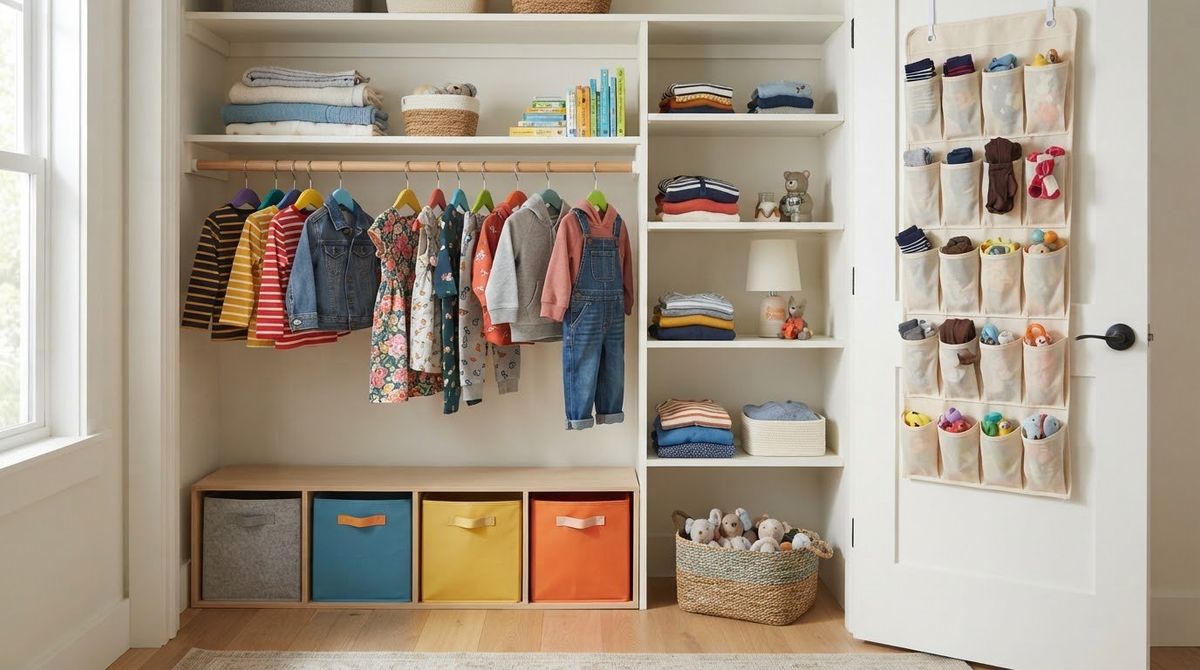
Part of our guide: Rainy Day Crafts for Kids: 10 Projects to Make Together
A kids closet works when a child can reach everything they wear without help, and when the clutter has somewhere to go. This guide walks through a nine-step setup for school mornings, including the safety checks most closet guides skip. It is part of our kids and family projects collection, and it pairs well with a backpack and coat station by the door.
Why do standard kids closets fail?
Standard closets are built for adults: one high rod, one high shelf and a floor that fills with shoes. A child cannot reach a rod set for an adult, so clothes end up on the floor or in a pile.
Fix the reach first. Children organize themselves when they can see and reach what they need. Everything else, including bins, labels and a weekly reset, only works after that.
Step 1: How do you purge a kids closet?
Take everything out, sort it into keep, too small, out of season and donate, and put back only what fits and gets worn. A closet with fewer items is the only kind that stays organized.
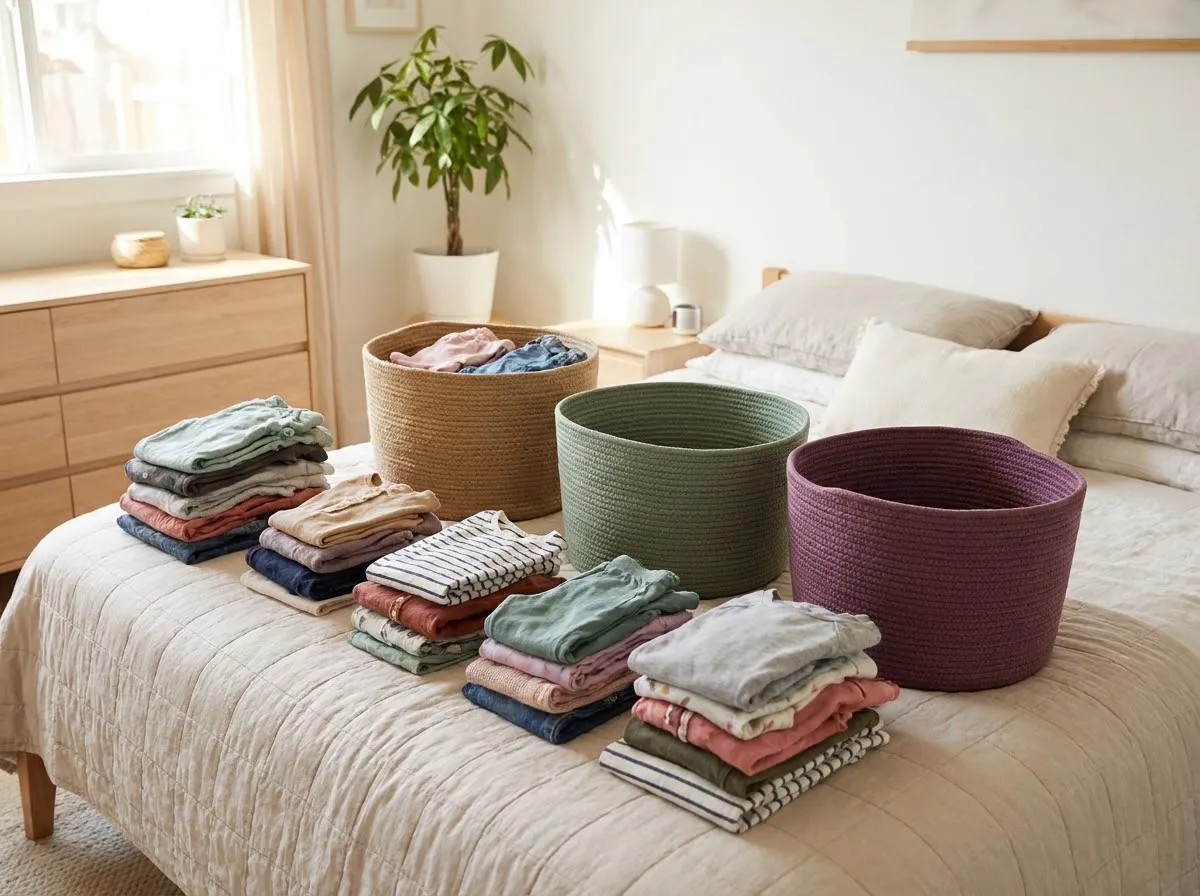
- Empty the closet and lay everything on a bed or the floor.
- Have the child try on questionable items, or hold them up against the child.
- Make four piles: keep now, too small, out of season, donate or pass on.
- Wipe the shelves and floor before anything goes back.
- Check each item for loose buttons, broken zippers and drawstrings (see the safety step below).
Involving the child in the keep pile gives them a stake in the result.
Step 2: How does a “too small” basket work?
Keep one basket in the closet for clothes the child has outgrown. Whenever you notice something that no longer fits, drop it in, so you never have to do another full purge.
When the basket is full, move the contents to labeled storage or donate them. This is the habit that makes the system last through the year.
Step 3: How do you install a kid-height hanging rod?
Add a lower rod, or move the existing one down, so the child can hang and grab clothes standing on the floor. Use a hardware set that is rated for the load and screw it into studs or the closet’s side walls.
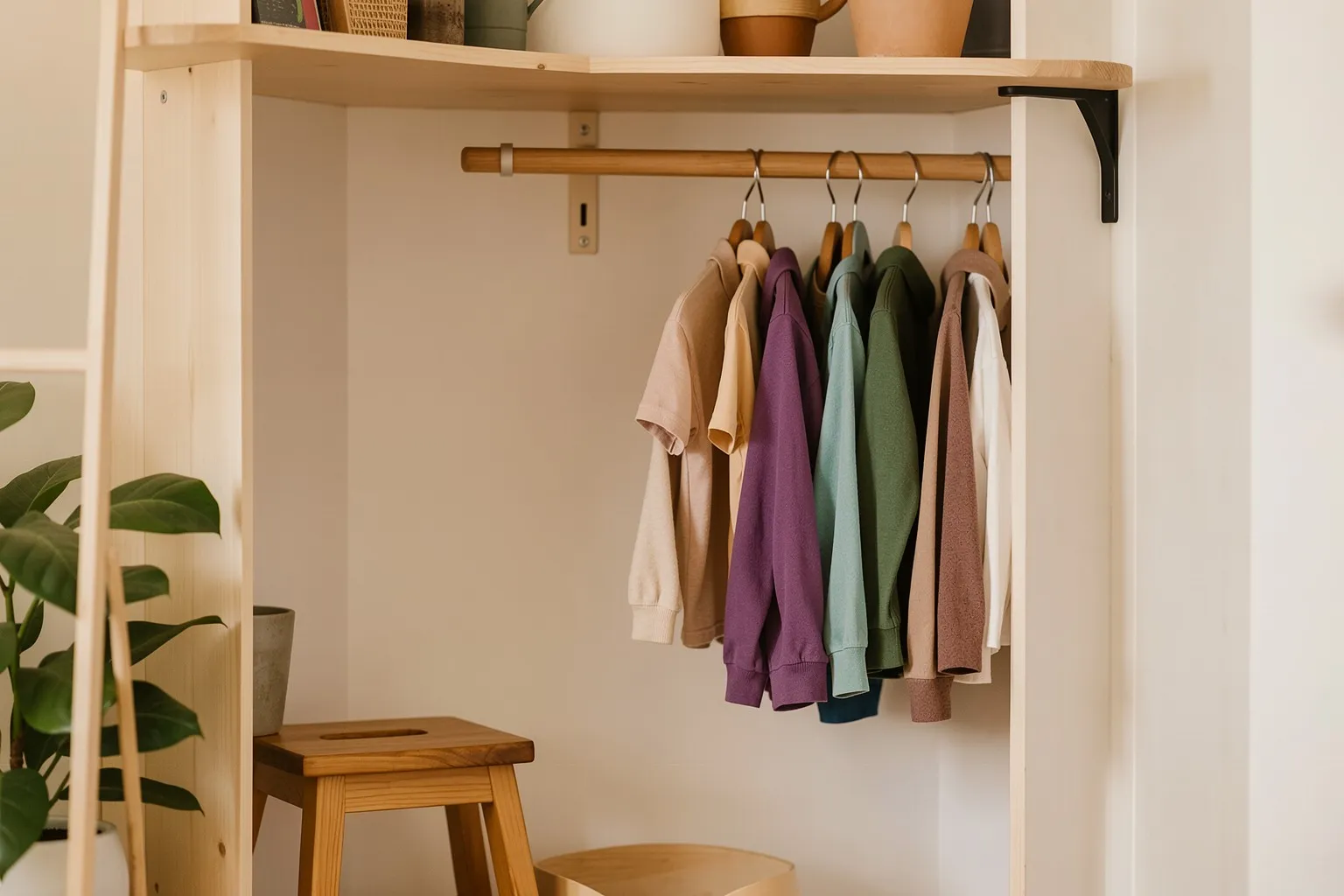
- Double rods. A lower rod for the child’s daily clothes and a higher rod for out-of-season or dress clothes use the space best in a standard closet.
- Adjustable hardware. Choose brackets that let you raise the rod as the child grows.
- Support. Anchor into wall studs or use proper wall anchors, and do not hang heavy coats on a rod that is only held by drywall anchors.
- Pre-1978 homes. If you plan to scrape or sand the closet walls or trim before painting, read the EPA guide on lead-safe work first. The EPA, HUD and CPSC say many homes built before 1978 have lead-based paint.
Step 4: How do you use bins and picture labels for non-readers?
Give every category a bin, label it with a picture, and keep the bins open at the front or lidless so a child can drop things in. Picture labels let a four-year-old do it without reading.
- Use photos or simple drawings: socks, pajamas, underwear, swimsuits, sports gear.
- Choose lightweight fabric or plastic bins with handles.
- Put daily items at child height and rarely used items higher.
- Add a word beside the picture for children learning to read.
Step 5: How do you set up a Monday-to-Friday outfit organizer?
Hang a five-day organizer, or five labeled hooks or bins, and choose the week’s outfits on Sunday. It removes the most common source of school-morning arguments: the decision.
- Pick five outfits, with the child choosing as much as possible.
- Put each one in a day compartment, including socks and underwear.
- Keep spare outfits in a separate bin for spills.
- After Friday, move dirty clothes straight to the hamper and restock on Sunday.
Step 6: How do you manage shoes and daily accessories?
Give shoes one low spot, such as a rack or a shallow bin, and give hats, gloves and belts a hook or small basket. A place for each thing makes putting it back the easy choice.
Keep school shoes and the current season’s pairs on the floor rack, and store off-season shoes in labeled boxes on the shelf. See the backpack and coat station guide for the entryway side of the routine.
Step 7: How do you handle seasonal clothes and bulky gear?
Store off-season clothes and bulky items in labeled, lidded bins on the high shelf, and swap them twice a year. Keep sports gear, costumes and keepsakes in their own bins so they do not mix with daily clothes.
Label each bin with the season and size. If a bin is heavy, put it on a lower shelf or the floor of the closet rather than overhead, and do not stack bins so high that they could tip onto a child.
Step 8: What safety rules matter in a kids closet?
Anchor tall furniture, store heavy items low, and check clothing drawstrings. These are the three hazards a closet makeover can create or solve.
Anchor dressers and shelves
If your closet system includes a dresser or shelves, fasten them to the wall. The Consumer Product Safety Commission’s (CPSC) Anchor It! campaign reports that about 11,300 children per year were treated in emergency rooms for furniture, TV and appliance tip-overs in 2017 to 2019, and that 77% of tip-over deaths from 2000 to 2019 involved children under 6. An anti-tip kit needs only a small hole in the wall. Our kids’ bookshelves guide covers anchoring in more detail.
Check drawstrings
CPSC says hood and neck drawstrings on children’s upper outerwear in sizes 2T to 12 are a strangulation hazard. For waist and bottom drawstrings in sizes 2T to 16, the string can extend no more than 3 inches outside the channel when the garment is fully expanded, and its ends must have no toggles or knots. CPSC recorded 26 deaths and 73 nonfatal incidents tied to neck or hood drawstrings from 1985 to June 2019. Remove drawstrings that do not meet these limits and replace them with snaps, elastic or zippers.
Mind small parts and heavy bins
Keep buttons, beads and loose accessories out of reach of children under 3. The federal small-parts rule, 16 CFR part 1501, bans small parts in products made for that age group. Store heavy items on low shelves, and do not leave a bin on a high shelf where it could fall.
Step 9: What is a good five-minute weekly reset?
Each Sunday, restock the outfit organizer, empty the “too small” basket if it is full, and put stray items back in their labeled bins. A reset only works if it is quick.
- Move laundry to the hamper and restock the five days.
- Check the floor for shoes and toys that wandered in.
- Drop anything too small in the basket.
- Look at the week’s weather and swap one outfit if needed.
If toys keep ending up in the closet, a toy rotation system guide gives them a home, and a playroom setup keeps them out of bedrooms.
What should you buy, and what should you skip?
Buy a few durable basics and skip anything that does not make the closet easier for the child to use. A rod, a handful of bins, labels, an outfit organizer and a shoe rack cover most needs.
| Item | Why it helps |
|---|---|
| Lower or double rod | Lets the child hang clothes alone |
| Open bins with picture labels | Gives each category a home |
| Five-day outfit organizer | Removes morning decisions |
| Shoe rack or shallow bin | Keeps floors clear |
| Lidded bins for the top shelf | Stores seasonal and outgrown items |
| Anti-tip kit | Secures dressers and shelves |
Prices vary widely by store and quality, so compare current prices before you buy. Reuse shoeboxes and baskets you already own wherever possible.
Frequently asked questions
How do I organize a small kids' closet on a tight budget?
Start by removing everything that no longer fits, then use what you already own. Lower the existing rod or add a second rod with inexpensive hardware, use shoeboxes or fabric bins as labeled containers, and hang a shoe organizer on the door. Keep only a school-week's worth of outfits within reach and store the rest above. The best budget fix is fewer items, not more containers.
How high should I hang a child's clothes?
Hang clothes where the child can reach them standing flat on the floor, with no stool. That means a rod noticeably lower than a standard adult rod, adjusted as the child grows. Hang school outfits and everyday clothes at that height and put special-occasion and out-of-season items on the high rod. Check the setup each season, and move the rod up as your child gets taller.
How many school outfits does a child need?
There is no official number, so choose by how often you do laundry. A week of outfits, plus a few spares for spills, covers most schedules for families who wash weekly. Count what you have, remove duplicates and worn-out items, and fill any gaps before the school year starts. Fewer clothes that fit and get worn are easier to keep tidy than a closet full.
How do I stop kids' closet clutter from coming back?
Make the system easy to use and reset it on a schedule. Give every category a labeled bin with a picture, keep a basket for clothes that are too small, and spend five minutes each week putting things back together. If it takes more than a few seconds for a child to put something away, simplify the system until it does.
Where should I store outgrown clothes for younger siblings?
Store them in labeled, lidded bins by size and season on a high shelf or in another room. Label each bin with the size and the season, wash items before storing them, and check them once a year. Keep a separate basket in the closet for clothes that are too small now, and move it to storage each time it fills up.
Are drawstrings on kids' clothes safe?
Hood and neck drawstrings on children's upper outerwear in sizes 2T to 12 are a strangulation hazard, according to CPSC. Waist drawstrings on sizes 2T to 16 should not stick out more than 3 inches and should have no toggles or knots at the ends. Cut off or remove drawstrings that do not meet this, and choose snaps, elastic or zippers instead.
Do I need to anchor a dresser in a kids' closet?
Yes. Furniture can tip when a child climbs a dresser or pulls out drawers, and the Consumer Product Safety Commission's Anchor It! campaign reports that about 11,300 children a year were treated in emergency rooms for tip-overs in 2017 to 2019. Anchor dressers, bookcases and tall shelving to a wall stud with an anti-tip kit, and keep the heaviest items low.
Source notes
Related guides
- DIY Backpack and Coat Station: Build an Entryway Drop Zone for School Mornings
Build a DIY backpack and coat station: plan hooks and cubbies at kid height, anchor them to studs, and follow AAP backpack weight and fit advice.
- Toy Rotation System: How to Set One Up Step by Step
Set up a toy rotation system in five steps: sort, store in labeled bins, pick a schedule, and swap toys so play stays fresh and the room stays tidy.
- How to Turn a Spare Room Into a Playroom (DIY)
Turn a spare room into a playroom with zones, low storage and safe setup: anchored furniture, cordless window coverings and lead-safe paint rules.
- Rainy Day Crafts for Kids: 10 Projects to Make Together
Ten rainy day crafts for kids with suggested ages, materials and steps, plus small-parts, hot glue and non-toxic paint safety rules.
- DIY Backyard Movie Night Setup: Screen, Projector, Safety
Set up a backyard movie night: build a PVC screen, place the projector, run power safely, and keep bugs and dew away from kids and blankets.
- Kids Workbench: How to Build One and Let Them Help Safely
Build a kids workbench at the right height, pick kid-sized tools, set safety rules, and give children real tasks like sanding and screwing.