How to Build DIY Raised Garden Beds on a Budget
Author: Christina Checked by Christina Projects Editorial Team Last reviewed Published on Last updated Category: Seasonal DIY
To build a budget raised garden bed, cut three 2x10x8 untreated boards and one 2x4 into a 4-foot by 8-foot frame, screw it together with corner cleats, level it on cleared ground and fill it with about 70 percent soil and 30 percent compost. Four feet is the widest bed you can reach across. Test the soil for lead if your yard is near an old building or a busy road.
Part of our guide: Seasonal DIY Calendar: What to Make and Do Each Month
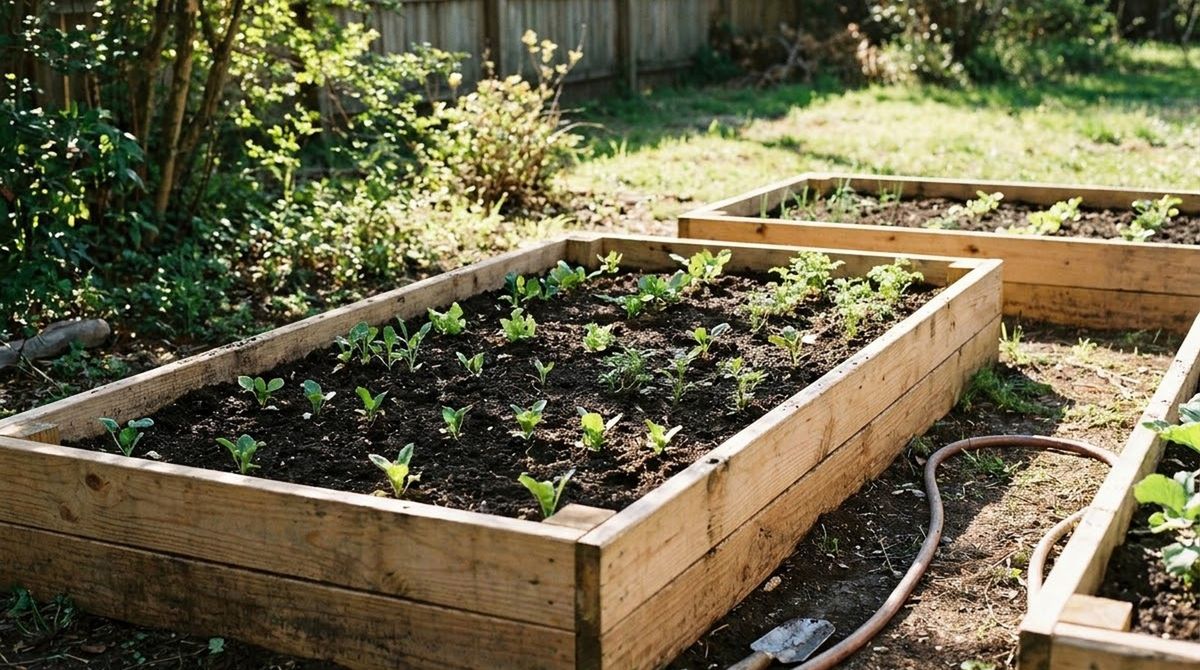
A raised garden bed is a wooden frame filled with a mix of soil and compost, and a basic 4-by-8-foot bed takes one weekend to build. This guide gives the lumber choice, a cut list, the assembly steps, the soil math and the safety points for gardens with food crops. It belongs in April on the Seasonal DIY Calendar. If you would rather grow in containers, see spring container gardens for small spaces or outdoor planters you can build with basic tools.
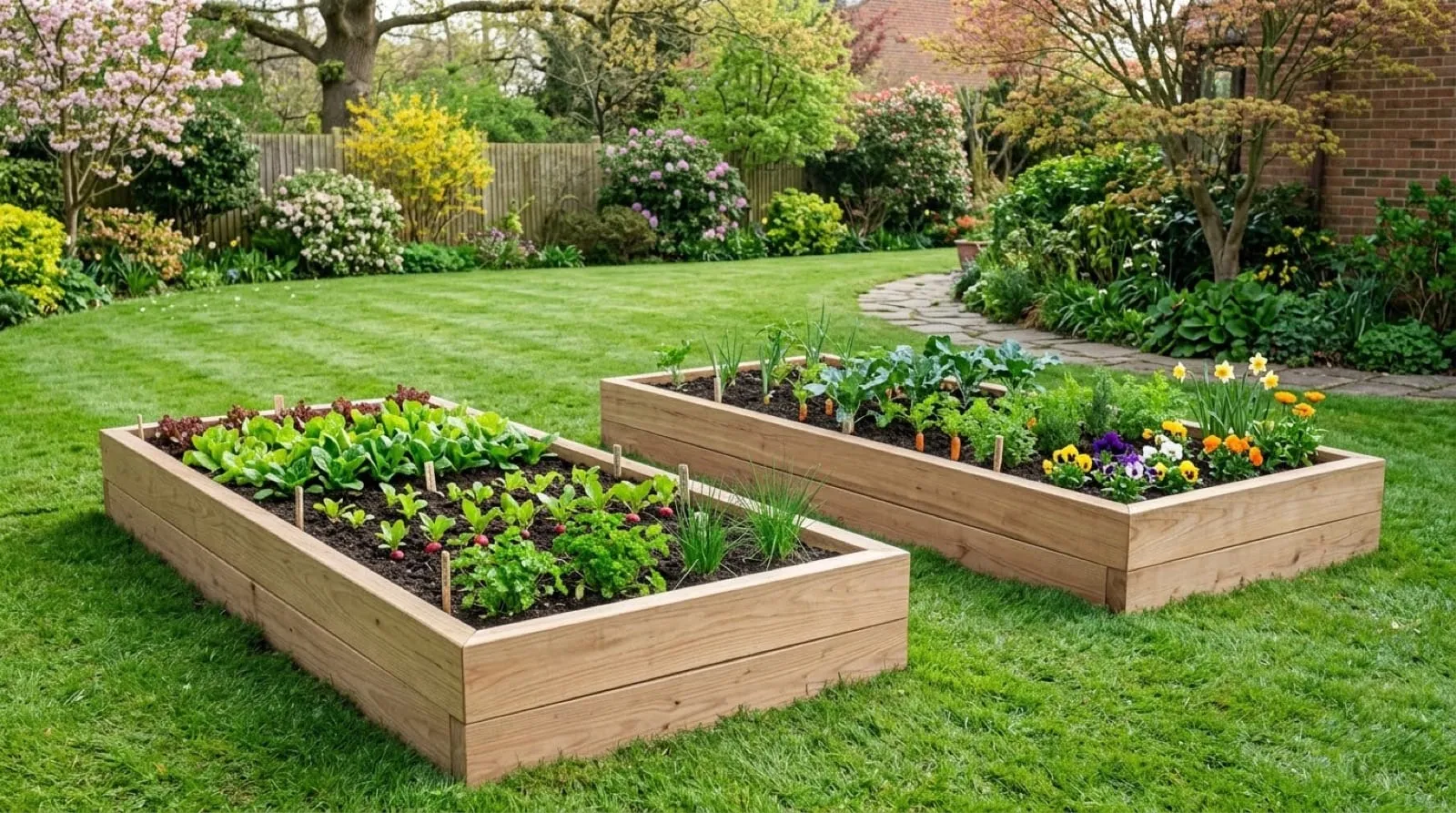
Why build a raised garden bed?
Raised beds improve drainage, warm up earlier in spring and bring the garden up to a more comfortable working height. According to University of Minnesota Extension, they also help where the soil is compacted, wet or contaminated with lead or other heavy metals, and they let you garden where an in-ground garden is not allowed or is not possible, such as on a patio.
Raised beds also dry out faster than the ground around them, and the taller the bed, the more often it needs watering. Plan to water more in summer.
What is the best wood for raised garden beds?
Untreated pine, fir or spruce is the cheapest, cedar or redwood lasts longest without treatment, and modern pressure-treated lumber is a middle option. The comparison table on this page sets the choices side by side. Oregon State University Extension notes that redwood and cedar resist decay but cost more, and pine and fir break down faster but cost a fraction as much.
Is pressure-treated wood safe for vegetables?
Modern residential pressure-treated lumber uses copper-based preservatives such as ACQ, copper azole and micronized copper azole, and the arsenic-based preservative CCA has not been sold for general residential use for more than 20 years. In an Oregon State study, copper levels rose in the soil only within about 1 inch of the board, and did not rise in the vegetables and herbs. Even so, take these steps if you choose treated wood:
- Buy lumber labeled for ground contact.
- Line the inside edges to reduce copper contact, as University of Minnesota Extension suggests.
- Never use railroad ties, or old or salvaged lumber, since it may contain CCA. Extension sources advise against it.
If you prefer to avoid any chemical contact, choose untreated pine, fir or cedar.
How big should a raised bed be?
A bed 4 feet wide and 8 feet long is the standard. Choose a width you can reach to the center from either side, so you never need to step into the bed and compact the soil. Place a bed against a fence or wall at 2 to 3 feet wide so you can reach across.
Extension guidance also says shorter boards of 6 feet or less are less likely to warp or break than long ones. If you use 8-foot boards, add the center brace in the steps below, or build a 4-by-6-foot bed instead. Several small beds also make crop rotation easier than one long bed. Height is a choice: a few inches is enough for many gardeners, 2x10 boards give about 9 inches, and a taller bed saves bending but needs more soil and more watering.
What tools and materials do I need for a 4x8 bed?
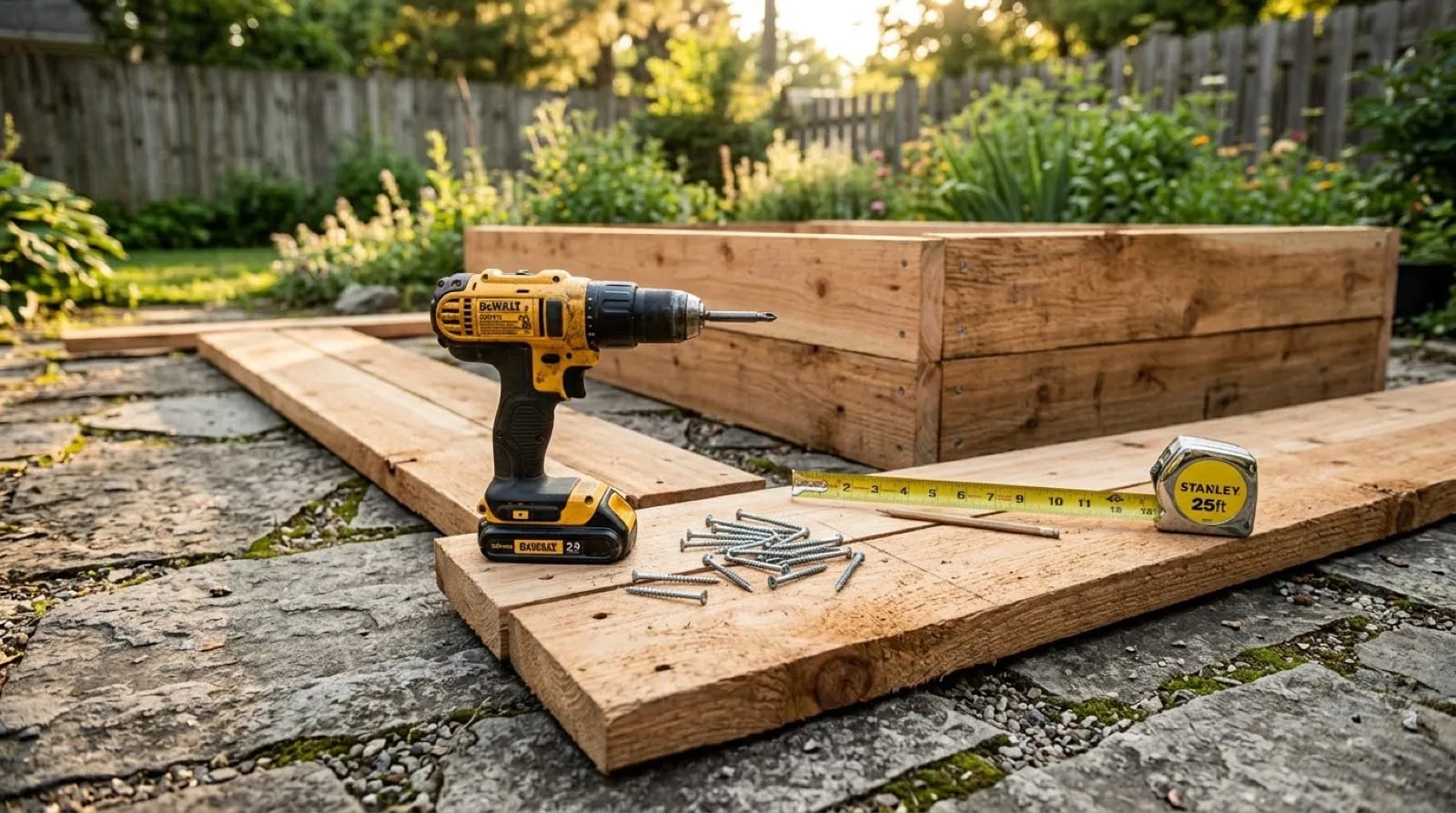
You need a drill, a saw, a tape measure and a square. The list below makes one bed that is 4 by 8 feet and 9.25 inches tall (the true height of a 2x10).
Materials
- Three 2x10x8 boards, untreated fir, pine or cedar. Two form the long sides, and the third is cut in half for the ends.
- One 2x4x8 board, cut into four corner cleats and two center braces.
- One box of 3-inch exterior-rated deck screws.
- Half-inch galvanized hardware cloth, if you have gophers or voles.
- A staple gun with galvanized staples.
- Flattened cardboard with all tape and labels removed.
Cut list
| Piece | Quantity | Length |
|---|---|---|
| Long sides (2x10) | 2 | 96 in (uncut) |
| End walls (2x10) | 2 | 48 in |
| Corner cleats (2x4) | 4 | 9.25 in |
| Center braces (2x4) | 2 | 9.25 in |
Wear safety glasses and hearing protection when you cut, and gloves when you cut or staple hardware cloth, since the cut wire ends are sharp. For tool buying, see the the basic homeowner toolkit.
How do I build a raised garden bed step by step?
Work on flat ground so you can square the frame as you go.
- Prep and level the site. Choose a spot with 6 to 8 hours of sun for tomatoes, peppers and eggplants, and near a water source. Remove sod and level the ground. Turn boards “heartwood in” if the growth rings are visible, so any warping curves slightly outward.
- Pre-drill pilot holes. Drill through the ends of the long boards and into the cleats, about a half inch from the edges, to prevent splitting.
- Fasten the end assemblies. Screw a cleat into each corner of the two 48-inch end boards, flush with the edges.
- Attach the long sides. Stand the ends upright and screw the long boards to the cleats with two 3-inch screws per corner, checking square with a framing square or by measuring the diagonals, which should match.
- Add center braces. Screw a brace to the inside of each long side at the 4-foot mark. This keeps 8-foot boards from bowing out when the soil is wet.
- Add hardware cloth if needed. Staple it across the bottom and up the sides to keep burrowing animals out.
- Line with cardboard. Lay cardboard on the ground inside the frame to smother grass and weeds. It breaks down as the plants root through it.
How much soil do I need, and what mix should I use?
A 4-by-8-foot bed filled to 9.25 inches needs about 24.7 cubic feet of mix, which is just under 1 cubic yard. The formula is length times width times depth, with depth in feet (9.25 inches is 0.77 feet).
Penn State Extension recommends a mix of 70 percent soil to 30 percent compost, and says both should be good quality and come from reputable sources. For this bed that is about 17 cubic feet of soil and 7.5 cubic feet of compost. Order a little extra, because the mix settles during the first weeks, and top it off in spring.
Buying in bulk from a landscape supplier is usually cheaper than buying bags, and splitting a load with a neighbor lowers the cost further. Ask the supplier what is in the mix, and buy only screened topsoil and finished compost.
Is my soil safe for a vegetable garden?
If your yard is near an old painted building or a busy road, test the ground before planting food. The EPA says lead exposure is more harmful to children and to people who are pregnant or breastfeeding. One of the best protections is a raised bed filled with clean soil over a visible barrier such as garden fabric. Most state university extension offices and some health departments offer soil lead testing.
Also follow these EPA practices: wash hands, tools and clothes after gardening, keep children and pets out of the garden if lead levels are unknown, take shoes off at the door, and keep mulch on the soil to reduce dust.
How can I keep the cost down?
Cost depends on lumber type and local prices, so compare quotes at two suppliers before you buy. These choices lower the total without lowering the quality:
- Choose untreated pine or fir for the frame.
- Use cardboard instead of weed fabric under the bed, and branches or compost from your yard for part of the fill.
- Use screws from a bulk box and skip the hardware cloth if you have no burrowing pests.
- Build one bed first and add more later.
- Compare local lumber prices before you buy, since they change often and vary by region.
Can kids help build and plant the bed?
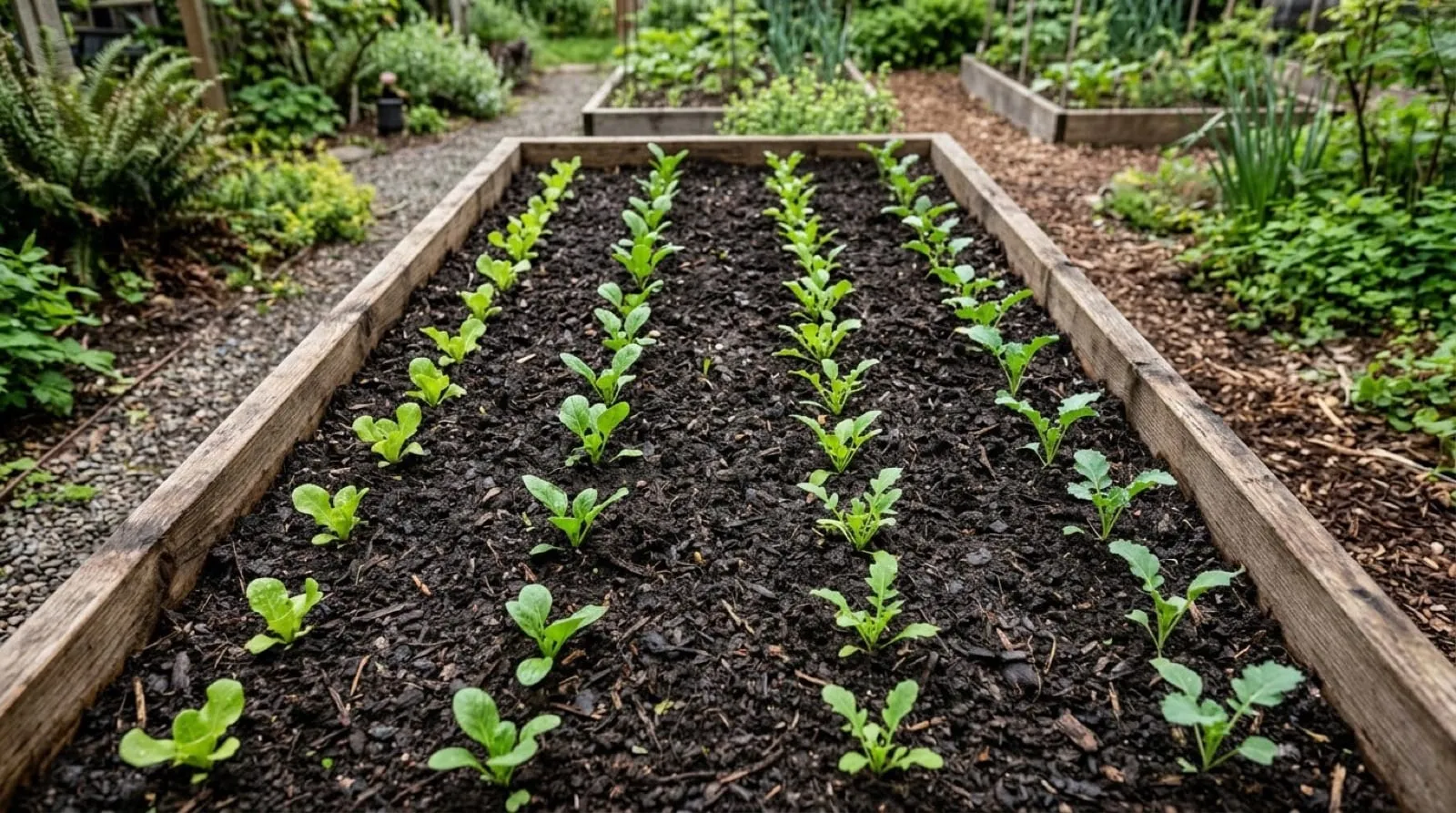
Yes, with the right jobs. Adults should do the sawing and driving of screws. Children can sort screws, mark cut lines with an adult, fill the bed with soil, plant seeds and water. Wash hands after gardening, and keep small seeds and tools away from toddlers. For more outdoor family projects, see a kid-friendly backyard play area on a budget and summer backyard diys walkthrough.
What else should I plant or build nearby?
Add a flower box for pollinators, or a planter by the door. See DIY flower box planters for a smaller wood project that uses the same skills, and the front porch spring swaps to pull the outdoor look together. When the beds are put away for winter, window bird feeders keep the yard lively.
| Lumber | Rot resistance | Relative cost | Notes for vegetable beds |
|---|---|---|---|
| Untreated pine, fir or spruce | Lowest | Lowest | Breaks down fastest in wet soil; the budget choice |
| Cedar or redwood | High | Highest | Rot-resistant without chemical treatment |
| Modern pressure-treated lumber | High | Middle | Use ground-contact-rated wood; line the inside edges to reduce copper contact |
| Galvanized steel panels | Very high | Higher up front | Long lasting; avoid acidic soil below pH 5, or add a liner |
| Old lumber, railroad ties, CCA-treated wood | Varies | Free | Do not use for edible gardens |
Use untreated pine or fir to keep the cost lowest and plan to replace the boards when they soften. Choose cedar if you want a longer-lasting wood bed without treatment. Never reuse old treated lumber or railroad ties for vegetables.
Frequently asked questions
What is the cheapest wood to use for raised garden beds?
Untreated pine, fir or spruce is the cheapest, since the cost is a fraction of cedar or redwood, according to Oregon State University Extension. The tradeoff is that softwood breaks down faster in constantly wet soil, so expect to replace boards sooner. Pick straight boards with few knots, and avoid reclaimed or old treated lumber for vegetables.
How deep should a raised garden bed be?
For many gardeners a bed raised only a few inches above the ground is enough, according to University of Minnesota Extension. A frame made from 2x10 boards gives about 9 inches of height. Go taller if you have poor or contaminated ground, to ease bending, or if the bed sits on pavement.
Do I need to put anything at the bottom of a raised bed?
On bare ground, lay flattened cardboard with the tape removed to smother grass and weeds, then add soil on top. If gophers or voles live in your area, staple half-inch galvanized hardware cloth under the frame first. If your soil may contain lead, put a visible barrier such as garden fabric under the clean fill, as the EPA advises.
How much soil do I need for a 4x8 raised bed?
Multiply length by width by depth in feet. A 4-by-8-foot bed filled to 9.25 inches deep holds about 24.7 cubic feet, or just under 1 cubic yard. With a 70 percent soil and 30 percent compost mix, that is roughly 17 cubic feet of soil and 7.5 cubic feet of compost. Order slightly more to allow for settling.
Is pressure-treated wood safe for a vegetable garden?
Modern residential pressure-treated lumber uses copper-based preservatives, and an Oregon State University study found copper rose only within about 1 inch of the board and did not increase in the vegetables. Use wood rated for ground contact. Do not use railroad ties or lumber more than 20 years old, which may be treated with arsenic-based CCA.
Should I stain or seal the wood on a raised bed?
It is best not to. Most paints, stains and sealers are not labeled for contact with food-garden soil, so check the label first. Choose naturally rot-resistant wood or accept that untreated pine will weather. If you want a barrier, line the inside walls with heavy plastic sheeting and leave the outside bare.
How much sun does a raised bed need?
Vegetables that fruit, such as tomatoes, peppers and eggplants, need at least 6 to 8 hours of direct sun a day. Leafy crops such as lettuce, baby kale, scallions and radishes still grow with only a few hours of sun. Watch the spot through a day before you build, and place the bed near a water source.
Source notes
- Oregon State University Extension: Pressure-treated wood for raised bed construction in Oregon (EM 9879, revised April 2026) (extension.oregonstate.edu)
- University of Minnesota Extension: Raised bed gardens (extension.umn.edu)
- Penn State Extension: Soil Health in Raised Beds (extension.psu.edu)
- U.S. EPA: Healthy Gardening Practices to Reduce Exposure to Lead-Contaminated Soil (epa.gov)
Related guides
- Seasonal DIY Calendar: What to Make and Do Each Month
A month-by-month calendar of seasonal DIY and decor projects, from winter mantels to spring planters, summer patios and fall wreaths.
- DIY Winter Bird Feeders: Bring Nature to Your Window
Make DIY winter bird feeders: fat-and-seed cakes, pinecone and milk jug feeders, plus the foods, window and cleaning rules that keep birds safe.
- DIY Thanksgiving Tablescape: Impress Your Guests
Build a DIY Thanksgiving tablescape in an evening: runner, low centerpiece, place settings and flameless candle tips, with fire safety rules.
- Cozy Fall Mantel Decor Ideas on a Budget
Style a cozy fall mantel on a budget with a four-layer formula, three color palettes, a DIY leaf garland and fireplace safety rules.
- Refreshing Your Front Porch for Spring: Simple Seasonal Swaps
Refresh your front porch for spring with a clean-up, a door wreath, outdoor-safe lighting, planters and a few cushion and mat swaps.
- Room-by-Room Spring Cleaning Checklist for Busy Moms
A room-by-room spring cleaning checklist for busy parents: supplies, the order to work in, a task list for each room and 20-minute sessions.