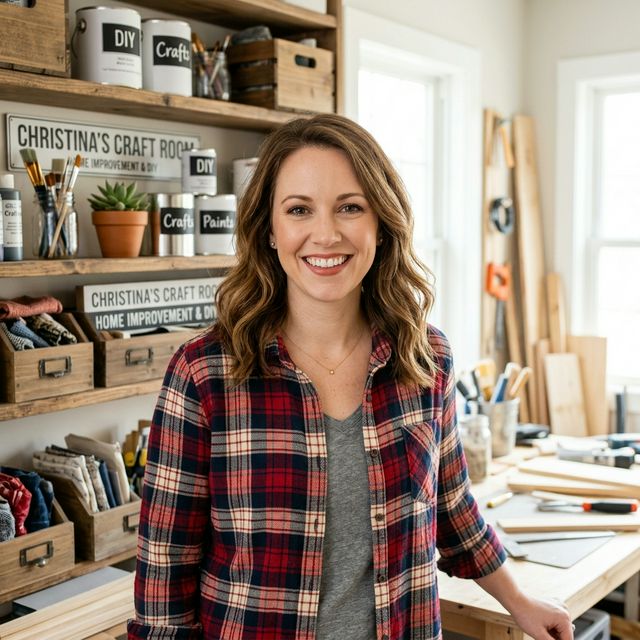
Every August, our home turns into a whirlwind of sharp new pencils, fresh notebooks, and frantic morning rehearsals. A couple of years ago, right as the new school year began, our morning routine collapsed under the weight of closet chaos. My kids were crying because they could not reach their shirts, socks were scattered in mismatched heaps, and getting dressed took twenty stressful minutes every day. That was the moment I realized standard closet setups simply do not work for young children, and that creating a practical system for kids closet organization was the only way to save our sanity.
As a busy mom and hands-on DIYer, I need real-life solutions that my kids can manage independently. Over a single weekend, my husband and I redesigned our children’s closets from the ground up using budget-friendly materials, lower hanging bars, and visual bins. Here at Christina Projects, I love sharing practical DIY projects that genuinely make family life easier. Today, I am walking you through our complete back-to-school closet overhaul so you can build a stress-free morning routine that lasts all school year long.
Why Standard Children’s Closets Fail (And How to Fix Them)
Standard builder-grade closets are engineered for adults, not children. The single hanging rod sits six feet high, and the upper shelf is completely out of reach. When kids cannot reach hangers or see inside high bins, they yank on clothing until whole piles crash onto the floor. Morning meltdowns are almost always about frustration with an inaccessible space.
The secret to lasting organization is designing for total child independence. When every shirt, pair of pants, and sock has an intuitive home at eye level, getting dressed becomes an empowering daily habit. If you are working with limited square footage, check out our guide on DIY closet organization for maximizing small spaces for smart layout ideas.
Step 1: The Great Back-to-School Closet Purge
Before buying bins or picking up tools, you must clear out clutter. Organizing clothes that no longer fit is just organizing future frustration. In early August, set aside one hour for a quick family sorting session with three clearly marked boxes:
- The Keep Box: Clothes that fit comfortably right now and match the upcoming school dress code.
- The Donate Box: Gently worn garments that have been outgrown for younger siblings, cousins, or donation centers.
- The Memory Box: A tiny collection of special sentimental items you want to preserve.
Have your child try on questionable items immediately to check pant lengths and shoe comfort. Keep the purge moving quickly and finish within forty minutes so young attention spans stay engaged.
Step 2: The Permanent “Too Small” Basket System
Children do not grow on a neat seasonal schedule. A pair of jeans that fits in September might be two inches too short by November after a sudden growth spurt. Without a dedicated spot for outgrown items, those tight clothes get washed and hung right back in the closet, causing daily morning confusion.
To solve this permanently, place a sturdy canvas bin on the closet floor labeled “Too Small.” The rule in our home is simple: the moment an item feels too tight, it goes directly into that basket instead of the laundry hamper. Once or twice a semester, sort the basket contents into storage totes by size for younger siblings or pack them for donation.
Step 3: Install Double Hanging Rods at Kid Height
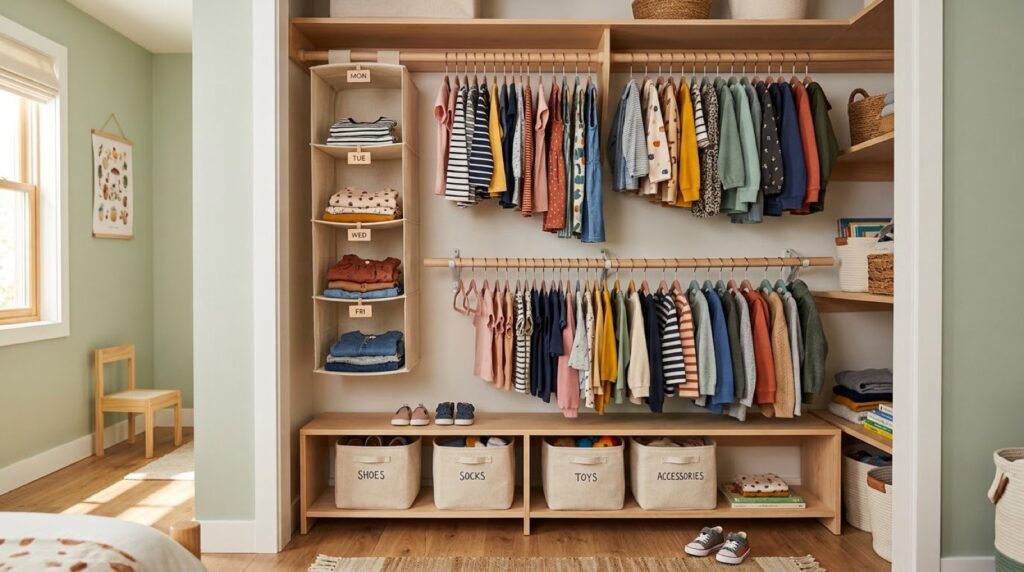
Standard closets waste huge amounts of vertical space because kids’ clothing is only eighteen to twenty-four inches long. Adding a second hanging rod doubles your hanging capacity instantly and brings daily clothing down to your child’s reach.
You have two great options for adding a lower rod:
- Option A: An Adjustable Hanging Rod Doubler: A steel bar that hangs directly from your existing top closet rod on adjustable straps, requiring zero tools.
- Option B: A Fixed Lower Closet Pole: Mount heavy-duty pole sockets into wall studs at thirty to thirty-four inches from the floor and insert a cut-to-size closet pole.
For custom track ideas, check out our complete tutorial on building a custom closet system with wire shelving. Reserve the lower rod for everyday school clothes and the upper rod for seasonal coats and formal wear.
Step 4: Use Visual Bins and Picture Labels for Non-Readers
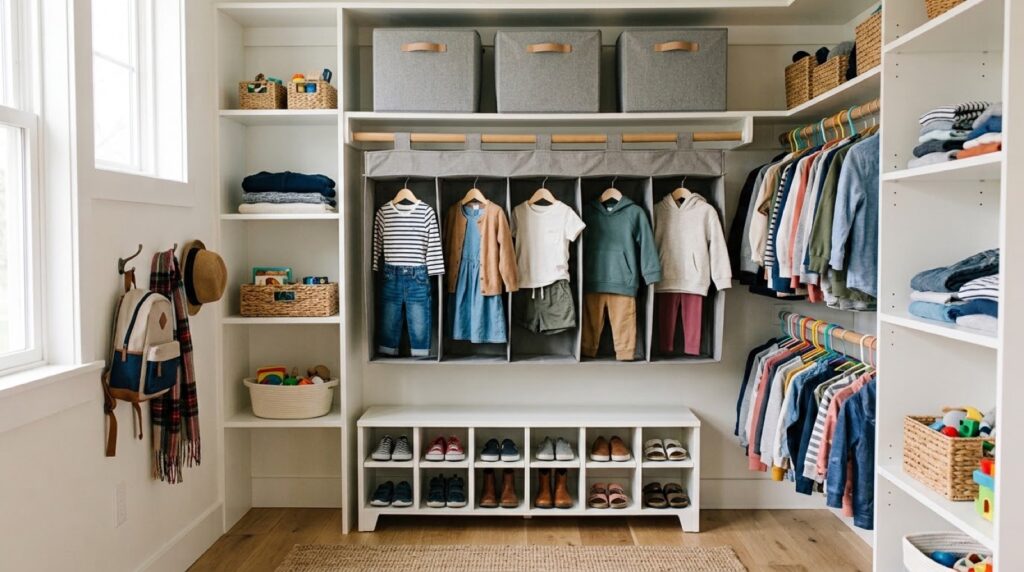
For preschoolers and early elementary students, traditional dresser drawers are black holes where clean laundry gets jumbled. Open-top bins combined with visual labels are the ultimate solution for stress-free kids closet organization.
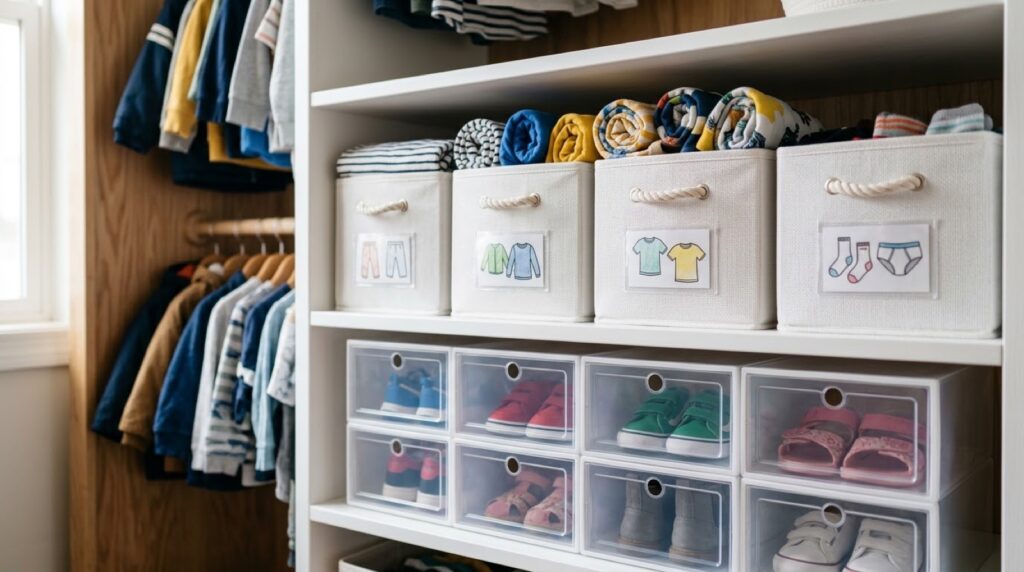
We use open fabric cubes and wire baskets arranged on low shelving units. Instead of demanding neat origami folding, we embrace the simple roll and drop method. Pajamas get rolled and dropped into the pajama bin, socks go into the sock basket, and play shorts go into their designated container.
To make the system foolproof for early readers, label every basket with both an icon and a bold word. You can easily download and print your own customized visual tags using our free printable home organization labels and templates.
Step 5: The Monday-to-Friday School Outfit Organizer
If you implement only one idea from this article, let it be the five-day hanging outfit organizer. Morning arguments over mismatched socks and lost shirts can derail an entire school day. Preparing a full week of clothes on Sunday evening eliminates morning friction entirely.
We use a hanging five-shelf fabric organizer hung directly on the lower closet rod, with shelves labeled Monday through Friday. Here is our simple Sunday evening routine:
- Check the Weekly Forecast: Review the upcoming local weather together so you know which days require rain boots, jackets, or gym clothes.
- Assemble Complete Outfits: In each daily cubby, place everything needed from head to toe: top, bottom, underwear, matching socks, and accessories.
- Account for School Spirit Days: If Wednesday is picture day or Friday is spirit day, load the required theme shirt into that compartment in advance.
On school mornings, your child simply pulls the complete bundle from that day’s cubby and gets dressed in minutes without any guesswork.
Step 6: Streamline Shoes and Daily Accessories
Shoe piles on the closet floor are a major source of bedroom clutter and lost sneakers. When shoes are tossed in a heap, kids struggle to find matching pairs right as you need to leave for the bus. A streamlined footwear setup keeps shoes visible, paired, and easy to grab.
Here are three reliable footwear storage solutions:
- Clear Pocket Over-the-Door Organizers: Transparent pockets allow children to spot sneakers instantly, while upper pockets hold belts, beanies, and sunglasses.
- Low Stackable Drop-Front Shoe Bins: Transparent drop-front boxes allow kids to grab shoes without unstacking containers.
- Durable Rubber Boot Trays: A low-profile tray catches muddy sneakers and rain boots without staining closet flooring.
To keep heavy backpacks from cluttering bedroom closets, pair this setup with an entryway drop zone. Read our guide on building a DIY backpack and coat station for the school rush to keep school gear organized near the front door.
Step 7: Seasonal Wardrobe Rotation and Bulky Gear
August is the perfect transition window to rotate your child’s wardrobe. Keeping a full year of winter coats, snow bibs, and summer swimwear in active closet space creates visual clutter and decision fatigue.
We keep only current-season clothing in active rotation using these simple storage strategies:
- High Shelf Storage Totes: Pack away beach towels and swimsuits into clear, labeled plastic bins on the top closet shelf.
- Under-Bed Rolling Bins: Low-profile rolling bins with latching lids are ideal for heavy winter coats and blankets until cold weather arrives.
- Vacuum Compression Bags: Seal bulky winter parkas into vacuum compression bags to reduce their volume by more than half.
Step 8: Critical Safety Rules for Children’s Closets
Safety is the most important part of any kids’ bedroom project. Children love to climb and reach for high items. Before considering your closet makeover complete, implement these essential safety checks:
- Anchor All Furniture to Wall Studs: Any modular shelving tower, cubby unit, or drawer chest placed in a closet must be anchored securely into wall studs using heavy-duty steel anti-tip brackets.
- Keep Heavy Items Low: Store heavy bins and book collections on the floor or bottom shelves, reserving upper shelves strictly for lightweight soft goods.
- Provide a Stable Step Stool: Provide a wide wooden step stool with non-slip rubber feet so kids never pull on hanging rods.
- Lighting Safety: Install battery-powered LED puck lights for dark closets. If installing hardwired overhead fixtures, always hire a licensed and insured electrician to handle the wiring safely according to local building codes.
Step 9: The 5-Minute Sunday Closet Reset Routine
The best organization system in the world is only as good as the routine that maintains it. When you have a system built around kid-level access and open bins, weekly maintenance takes only five minutes every Sunday evening:
- Return any empty hangers to the lower closet rod.
- Check the “Too Small” basket and empty it into storage totes if full.
- Load five complete outfits into the Monday-to-Friday hanging organizer.
- Toss stray shoes back into their door pockets or floor cubbies.
- Praise your child for keeping their space tidy and taking responsibility for their morning routine.
Our Top 10 Picks for Kids Closet Organization
Here are our favorite practical, durable products to help you create a kid-friendly closet that lasts all school year long:
- Adjustable Hanging Closet Rod Doubler: This steel bar hangs from your top closet rod to create a second hanging tier at kid height without drilling. It typically costs $12 to $18.
- Daily Hanging Weekday Outfit Organizer: A five-tier fabric hanging shelf with labeled Monday through Friday compartments lets you organize school clothes in advance for $14 to $22.
- Clear Over-the-Door Pocket Organizer: Clear vinyl pockets hold shoes, socks, belts, and accessories at eye level inside the closet door. These usually cost $10 to $16.
- Kids’ Non-Slip Velvet Clothes Hangers: Sized for kids, slim velvet hangers keep small collars from stretching and stop clothes from sliding onto the floor for $18 to $28 per pack.
- Fabric Storage Cube Bins with Label Holders: Foldable fabric bins slide into low shelving units to hold rolled pajamas and play clothes for $16 to $25 for a six-pack.
- Clear Acrylic Shelf Dividers: These clear slip-on dividers keep stacks of folded sweaters and bins separated on upper shelves for $15 to $25 a set.
- Heavy-Duty Furniture Anti-Tip Wall Safety Straps: Essential for safety, heavy-duty metal cables securely anchor shelving towers and dressers into wall studs for $10 to $18.
- Stackable Drop-Front Shoe Storage Boxes: Transparent drop-front shoe boxes let kids grab sneakers easily without disturbing stacked boxes for $22 to $35 for six.
- Clip-On Metal and Chalkboard Bin Labels: Metal clips attach to fabric bins or baskets to hold picture cards or chalkboard labels for $8 to $14 per pack.
- ClosetMaid Modular Closet Organizer Tower: A freestanding laminate shelving unit provides adjustable shelves and optional drawers inside reach-in closets for $45 to $95.
Kids’ Closet Makeover Cost Comparison
Organizing your children’s closets does not have to drain your budget. Here is a realistic breakdown of typical project costs:
| Project Scope | Typical Cost Range | What Is Included | Best For |
|---|---|---|---|
| DIY Budget Refresh | $40 to $90 | Hanging rod doubler, 5-day outfit organizer, over-the-door shoe pocket holder, and a pack of velvet hangers. | Renters, families on a tight budget, or quick weekend back-to-school setups. |
| Semi-Custom Modular System | $120 to $250 | Laminate center organizer tower, two fixed hanging rods, fabric storage cubes with label clips, and anti-tip wall anchor hardware. | Growing children needing versatile, adjustable shelving and hanging space for multiple years. |
| Custom Built-In Closet Upgrade | $500 to $1,200+ | Hardwood or premium melamine built-in shelving, custom soft-close drawers, hardwired LED lighting, and custom shoe racks. | Permanent home renovations where maximizing long-term resale value and aesthetics is the top goal. |
For most busy families, the budget refresh or semi-custom modular setup provides all the daily functionality you need while keeping costs well under control.
Frequently Asked Questions
How do I organize a small kids’ closet on a tight budget?
Start by doubling your vertical hanging space with an inexpensive hanging rod doubler, which creates two tiers of hanging clothes for under twenty dollars. Use an over-the-door clear pocket organizer for shoes and accessories to free up floor space. Repurpose fabric bins with printed visual picture labels for folded clothes, and keep non-seasonal items stored in vacuum bags under the bed.
At what height should I hang clothes for a child?
For toddlers and elementary school children, lower hanging rods should be mounted thirty to thirty-four inches from the finished floor. This allows kids between three and nine years old to easily reach their own clothes without standing on stools. Keep the upper rod at seventy to seventy-two inches for off-season items and parent-assisted clothing.
How many school outfits does an elementary school kid actually need?
In most households doing weekly laundry, seven to ten complete school outfits are plenty. Having roughly ten shirts, seven pairs of pants or skirts, two hoodies, and seven to ten pairs of socks and underwear prevents clothing overwhelm while providing enough clean clothes for a full week plus weekend activities.
How do you stop kids’ closet clutter from creeping back during the school year?
The key is combining a dedicated outgrown clothes basket with a five-minute Sunday reset routine. When too-small items are removed immediately rather than returned to hangers, closet inventory stays relevant. Spending five minutes every Sunday evening setting out weekly outfits prevents mess from accumulating into a major chore.
What is the best way to store outgrown clothes for younger siblings?
Store outgrown children’s clothing in clear plastic storage totes sorted by gender, season, and specific size. Wash and dry every item before packing, include a cedar block to keep fabrics fresh, and place a large printed inventory label on the tote. Store the bins in an attic or high shelf until needed.
Final Thoughts: Making School Mornings Peaceful Again
Transforming your children’s closets before the school year begins is one of the most rewarding home projects you can tackle this August. By lowering clothes rods to child height and implementing visual bins with weekly outfit planning, you give your kids the tools they need to dress themselves with confidence every morning.
You do not need an expensive custom closet designer to achieve lasting results. With a few affordable storage pieces, clear labels, and a consistent Sunday routine, you can turn chaotic school mornings into calm beginnings. When you establish dependable systems for kids closet organization, the entire household feels more relaxed and ready for the day. If you are organizing the rest of your home for school, check out our guide to creating a DIY family command center to keep everyone organized.
What is your biggest challenge when getting kids dressed on busy school mornings? Drop your questions and favorite kids closet organization tricks in the comments below, I would love to hear from you!