Creating a Homework Station That Actually Gets Kids to Focus (Without the Tears)
Let me tell you about the time I tried to get my son to do his math homework at the kitchen table while I was making dinner. The table was covered in flour from my failed attempt at homemade pizza dough, my daughter was practicing her violin (badly), and my son kept asking me to check every single problem. It was a disaster. That night, I realized we needed a better system – one that didn’t involve me wanting to hide in the pantry with a glass of wine by 6 PM.
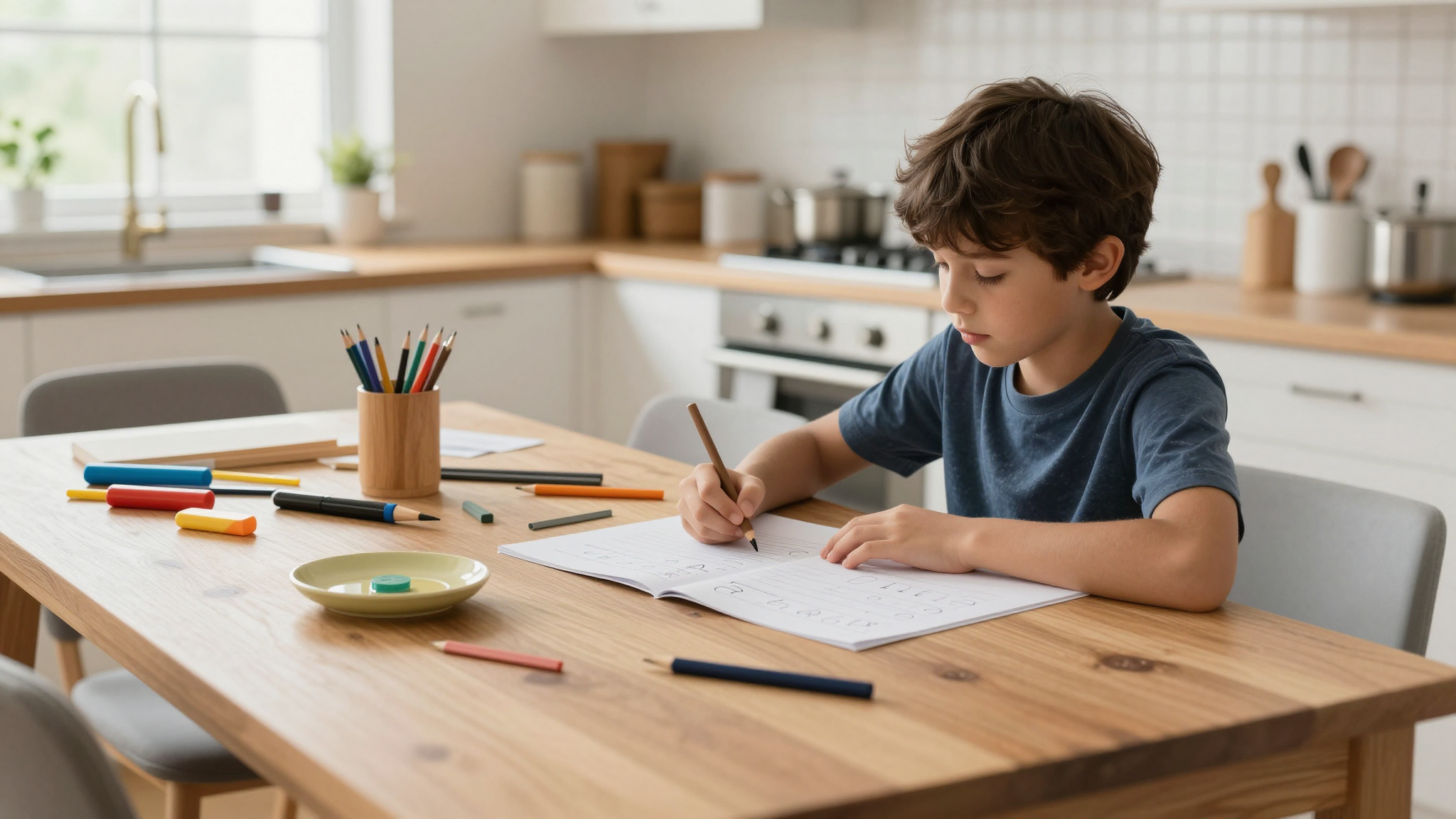
After some trial and error (and a few more meltdowns), I created a homework station that actually works. It’s not fancy – just a simple desk in the corner of our living room with good lighting and all the supplies he needs. But it’s made a world of difference. No more “I can’t find my pencil” excuses, no more “I need a calculator” interruptions, and – most importantly – no more homework battles that make me question my parenting skills.
If you’re struggling with homework time at your house, you’re not alone. The key is creating a space that’s specifically for schoolwork – not just any available surface. It should be free from distractions, stocked with supplies, and designed to help your kids focus. The best part? You don’t need a big budget or a spare room to make it happen.
Why a Dedicated Homework Station Changes Everything
I used to think that as long as my kids had a place to sit and a flat surface, they could do their homework anywhere. Boy, was I wrong. The kitchen table became a battleground, the coffee table was too small, and the couch was just asking for distractions. What I didn’t realize was that kids – just like adults – need a designated space for focused work.
When my son had a specific place to do his homework, something magical happened. He started finishing his assignments faster, with fewer complaints. He knew exactly where to find his supplies, and he didn’t have to ask me for help as often. The best part? Homework time became shorter and less stressful for both of us.
Here’s what I’ve learned from my own trials and errors:
- Having a consistent spot for homework creates a routine that kids can rely on
- It keeps all school supplies in one place, so there’s less searching and more doing
- It reduces distractions that come from doing homework in high-traffic areas
- It teaches kids organizational skills they’ll use for the rest of their lives
I’ll be honest – the first few weeks were rough. My son kept trying to sneak in his tablet, and I had to remind him a dozen times to stay at his desk. But once we got into the routine, it became second nature. Now, he actually asks to do his homework at his desk because it’s become his “work space,” not just another place to sit.
Choosing the Right Spot: Where to Set Up Your Homework Station
One of the biggest mistakes I made was trying to cram the homework station into a space that didn’t work. I first tried putting it in the corner of the kitchen, but it was too close to where I cooked. Then I moved it to the dining room, but it was too far from where I was working. Finally, I settled on a spot in our living room that’s near my workspace but still gives my son some privacy.
Here are some of the best places I’ve found for homework stations, based on my own experience and what’s worked for other parents I know:
Stair Landings: The Unexpected Hero
If you have stairs in your home, you might be sitting on a goldmine of unused space. I know a mom who turned her stair landing into a cozy homework nook with a wall-mounted desk and a small chair. It’s the perfect size for one child, and it doesn’t take up any valuable floor space. The only downside? You have to be careful about tripping over backpacks and shoes.
Pro tip: If you go this route, make sure to add good lighting. I used a small LED desk lamp that clips right onto the desk. It’s bright enough to see but not so bright that it bothers the rest of the family.
Wide Hallways: More Than Just a Pathway
Before I moved the homework station to the living room, I tried putting it in the hallway. It wasn’t ideal – there were too many distractions from people walking by – but it worked in a pinch. If you have a wide hallway, you can create a similar setup with a slim desk and a small chair. Just make sure to leave enough room for people to walk by without bumping into the desk.
I also know a family who turned their hallway into a “command center” with a long desk that runs along one wall. It’s big enough for two kids to work side by side, and it’s close to the kitchen so they can grab a snack if they need one. The key is to keep it organized so it doesn’t become a cluttered mess.
Guest Rooms: A Space That Works Harder
If you have a guest room that sits empty most of the time, why not put it to good use? I turned our guest room into a homework and playroom combo. It’s not fancy – just a simple desk, a bookshelf, and a small rug – but it works. The best part? When we have guests, I can quickly clear off the desk and move the chair to make room for an air mattress.
If you go this route, make sure to choose furniture that’s easy to move. I used a lightweight desk with wheels so I can roll it out of the way when we need the space for something else. It’s not perfect, but it works for us.
Radiator Covers: A Clever Solution for Older Homes
If you live in an older home with radiators, you might be able to turn them into a homework station. I know a family who built a custom desk that sits on top of their radiator cover. It’s the perfect height for their kids, and it doesn’t take up any extra space. The only downside? You have to be careful not to block the heat.
If you’re handy, you can build your own radiator cover desk. If not, there are plenty of pre-made options online. Just make sure to measure your radiator first so you know what size you need.
Personalizing the Space: Making It Their Own
One of the biggest lessons I learned was that kids are more likely to use a space if they feel like it’s theirs. That’s why I let my son help design his homework station. He picked out the color of the desk (a bright blue that I never would have chosen), and he picked the decorations (a poster of his favorite soccer player and a few of his favorite toys).
Here’s what I’ve found works best for different age groups:
Ages 5-8: Bright, Fun, and Playful
At this age, kids are still developing their focus, so it’s important to make the space fun and inviting. I used bright colors, fun shapes, and plenty of storage for all their supplies. I also added a small whiteboard so they can practice their letters and numbers.
Pro tip: If you have a young child, consider adding a timer to their desk. It helps them stay on task and makes homework feel like a game. I used a simple sand timer, but you can also find digital timers that are designed just for kids.
Ages 9-12: Theme-Based and Organized
By this age, kids are starting to develop their own interests, so it’s a good idea to incorporate those into their homework station. My daughter loves horses, so we decorated her desk with horse-themed supplies and a few of her favorite horse figurines. It makes her more excited to do her homework, and it helps her stay organized.
I also added a growth chart to her desk so she can track her height over time. It’s a fun way to keep her motivated, and it’s a great reminder of how much she’s growing.
Teens: Sleek, Sophisticated, and Functional
By the time kids hit their teens, they’re looking for a space that’s more mature and functional. That’s why I let my oldest daughter design her own desk. She chose a sleek, modern design with plenty of storage for her supplies. She also added a few personal touches, like a photo of her and her friends and a small plant.
Pro tip: If you have a teen, consider adding a power strip to their desk so they can charge their devices. It’s a small touch, but it makes a big difference in how much they use the space.
Designing a Functional Homework Station: What Really Works
When I first started setting up the homework station, I made the mistake of thinking that more storage was always better. I bought a huge bookshelf and filled it with every supply I could think of. But all that stuff just ended up collecting dust, and it made the space feel cluttered. Now, I keep it simple and only include what my kids actually need.
Smart Storage Solutions
One of the best investments I made was a set of colorful cubbies. They’re perfect for organizing books, papers, and supplies, and they add a pop of color to the space. I also use a few small bins to keep things like pencils, erasers, and markers organized. It’s amazing how much easier it is to find what you need when everything has a place.
I also added a pegboard to the wall above the desk. It’s great for hanging up things like backpacks, headphones, and even a small whiteboard. It keeps everything within reach and makes the space feel more organized.
Ergonomic Desk and Seating Options
I’ll be honest – I didn’t think much about ergonomics when I first set up the homework station. But after my son started complaining about his back and shoulders hurting, I realized I needed to make some changes. Now, I make sure his chair is the right height so his feet can touch the floor, and I use a desk that’s the right size for his body.
If you’re not sure what size desk or chair to get, measure your child’s height and use that to guide your choices. A good rule of thumb is to make sure their elbows are at a 90-degree angle when they’re sitting at the desk. It might seem like a small detail, but it makes a big difference in how comfortable they are.
Creative Homework Station Ideas for Small Spaces
When we moved into our current home, I was worried that we wouldn’t have enough space for a homework station. But after some creative thinking, I realized there were plenty of options. Here are a few of the best ideas I’ve found for small spaces:
Kitchen Table Conversions: A Temporary Solution
If you don’t have a dedicated space for a homework station, the kitchen table can work in a pinch. But I’ve found that it’s better to have a separate space if possible. That’s why I created a small nook in our kitchen that’s just for homework. It’s not fancy – just a small desk and a chair – but it works.
Pro tip: If you use the kitchen table for homework, try to set up a routine where your kids know it’s “homework time” and not “play time.” It might take some time to get used to, but it’s worth it in the end.
Closet and Under-the-Stairs Transformations: Hidden Gems
One of my favorite small-space solutions is turning a closet into a homework station. I know a family who did this in their hallway closet. They removed the door and added a small desk and a chair. It’s the perfect size for one child, and it doesn’t take up any extra space.
I also love the idea of using the space under the stairs. It’s often wasted space, but it can be turned into a cozy homework nook with a little creativity. I’ve seen desks built into the sloped area under the stairs, and even small bookshelves to hold supplies. It’s a great way to make use of a space that might otherwise go unused.
If you’re not sure how to get started, check out this DIY stair makeover guide for some inspiration. It’s not just about stairs – it’s about thinking creatively about the spaces you already have.
DIY Homework Station on a Budget: What I’ve Learned
When I first started setting up the homework station, I was worried it was going to cost a fortune. But I quickly realized that you don’t need to spend a lot of money to create a functional space. Here are some of the best budget-friendly ideas I’ve found:
Pegboard Organizers: A Game Changer
One of the best investments I made was a pegboard organizer. It’s perfect for hanging up supplies like pencils, erasers, and markers. It’s also easy to customize – you can add hooks, baskets, and even a small whiteboard. The best part? It’s affordable and easy to install.
I used a simple pegboard from the hardware store and added a few hooks and baskets. It cost me less than $20, and it’s made a huge difference in how organized the homework station is.
Repurposing Old Furniture: Give It New Life
Instead of buying a new desk, I repurposed an old table I had in the garage. I sanded it down, painted it a bright color, and added a few new legs. It’s not perfect, but it works, and it saved me a lot of money.
If you don’t have an old table lying around, check out thrift stores or Facebook Marketplace. You can often find great pieces for a fraction of the cost of new furniture. Just make sure to clean it up and give it a fresh coat of paint before using it.
Simple Storage Solutions: Think Outside the Box
You don’t need expensive organizers to keep the homework station tidy. I use a few simple solutions that have worked well for us:
- Tin cans for pencils and markers
- Mason jars for supplies like paper clips and rubber bands
- Cardboard magazine holders wrapped in fabric for paper organizers
These solutions are cheap, easy to find, and they do the job. Plus, they add a little personality to the space.
Must-Have Tools for Your Homework Station
One of the biggest mistakes I made was not stocking the homework station with all the supplies my kids needed. It led to constant interruptions – “Mom, where’s my pencil?” “Mom, I need a calculator!” – and it made homework time much more stressful than it needed to be.
Now, I make sure the homework station is stocked with everything my kids need before they even sit down. Here’s what I keep on hand:
Writing Essentials: The Basics
I always have plenty of pencils, pens, and erasers on hand. I also keep a sharpener and a small trash can nearby. It might seem like a small detail, but it makes a big difference in how smoothly homework time goes.
Pro tip: I buy pencils in bulk and keep them in a jar on the desk. It’s a simple solution, but it’s saved me from countless “I can’t find a pencil” interruptions.
Paper and Technology: The Modern Essentials
I keep a variety of paper on hand – lined paper for notes, blank paper for calculations, and graph paper for special projects. I also make sure there’s a reliable computer with a charger at the desk. If your kids use headphones for online learning, keep a pair at the desk too.
I learned this the hard way when my son needed to do an online assignment and we couldn’t find the charger. Now, I make sure everything is charged and ready to go before homework time starts.
Organization Aids: Keep It Tidy
I use a simple desk organizer to keep pens, pencils, and other small items organized. I also have a folder for current assignments and a binder for completed work. It’s a small thing, but it keeps the desk tidy and makes it easier to find what you need.
If you’re not sure what to buy, check out this guide to essential tools for some ideas. It’s not just about tools – it’s about finding the right solutions for your space.
Family-Friendly Study Zones: Making It Work for Everyone
If you have more than one child, creating a homework station can be a little more challenging. You need to find a space that works for everyone, and that can be tricky. Here’s what I’ve learned from my own experience and from talking to other parents:
Collaborative Workspaces: When Kids Work Well Together
If your kids get along well, a shared workspace can be a great solution. I know a family who set up a long desk in their living room with two chairs. Each child has their own side of the desk, and they share the supplies in the middle. It works well for them, and it saves space.
If you go this route, make sure to give each child their own set of supplies. It prevents arguments over who gets to use the red pen or the favorite pencil. I also recommend using visual markers, like colored folders or small photo holders, to define each child’s space.
Establishing Consistent Homework Routines: The Key to Success
One of the biggest lessons I’ve learned is that consistency is key. If you want homework time to run smoothly, you need to establish a routine and stick to it. That means setting a specific time for homework, making sure the space is ready, and being available to help when needed.
Here’s what works for us:
- We start homework time at the same time every day after school.
- I make sure the desk is stocked with supplies before my kids sit down.
- I’m available to help with questions, but I also encourage them to try to figure things out on their own.
- We take a short break halfway through to stretch and grab a snack.
It’s not always perfect, and there are still days when homework time is a struggle. But overall, having a routine has made a huge difference in how smoothly things go.
Inspiring Decor and Organizational Tips: Making It Work
One of the things I love most about our homework station is how personalized it is. It’s not just a desk and a chair – it’s a space that reflects my kids’ personalities and makes them excited to do their homework. Here are some of the decor and organizational tips that have worked for us:
Wall-Mounted Storage: Think Vertical
If you’re short on space, think vertical. I added a few floating shelves above the desk to hold books and reference materials. I also installed a pegboard on the wall to hang up supplies like backpacks and headphones. It keeps everything within reach and makes the space feel more organized.
Pro tip: If you’re not sure how to install a pegboard, check out this guide to DIY wainscoting. It’s not just about wainscoting – it’s about learning basic installation techniques that you can use for all kinds of projects.
Inspirational Decor: Motivate and Encourage
I added a few motivational quotes and educational posters to the wall above the desk. It’s a small touch, but it makes a big difference in how my kids feel about doing their homework. I also added a chalkboard so they can work out problems or write down their goals.
If you’re not sure what to hang on the wall, consider adding a few of your kids’ favorite things. It could be a poster of their favorite sports team, a photo of their friends, or even a few of their favorite toys. The key is to make the space feel like theirs.
Final Thoughts: Start Small and Build
If you’re feeling overwhelmed by the idea of creating a homework station, don’t be. You don’t need to do everything at once. Start with the basics – a desk, a chair, and a few supplies – and build from there. Over time, you can add more storage, decor, and organizational tools to make the space work even better.
Remember, the goal is to create a space that helps your kids focus and makes homework time easier for everyone. It doesn’t have to be perfect, and it doesn’t have to be expensive. It just needs to work for your family.
If you’re not sure where to start, check out this guide to DIY projects that add charm to your home. It’s full of ideas for small projects that can make a big difference in how your space feels.
Now, go forth and create a homework station that actually works for your family. And if you run into any snags along the way, just remember – I’ve been there too. It’s all about trial and error, and what works for one family might not work for another. The most important thing is to keep trying until you find what works for you.